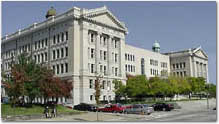
One of the greatest stigmas against Baltimore’s educational system (or any urban system, for that matter) is the “zip code effect”: the notion that students are confined to the educational institutes in close proximity to their residences, for better or for worse.
Today, Baltimore’s three most prestigious high schools – City, Poly, and Western – are defying that stigma, proudly accepting students based on academic merit rather than domestic location.
Might that change, though? If recent media reports are correct, Alonso and BCPSS might not have so much boasting power that students actually are capable of an excellent education via a magnet setting. A recent Sun article explored the recent declining SAT test scores of these three schools, and exposed their startlingly low college graduation rates (39% and 46% for City and Poly, respectively). The article continues,“The quality of those schools… is a drawing card that attracts families to Baltimore.” I’d argue that these schools not only represent a hope for potential new residents, but they also represent a hope for Baltimore natives who would otherwise be forced to attend a zoned school within the proximity of their residence.
If City, Western, and Poly can no longer boast impressive college graduation rates, SAT scores, or (at the very least) an HSA passing rate competitive with the state of Maryland, Baltimore City Schools might receive even more criticism from those who claim that BCPSS can no longer boast a way for students to reach academic heights by their merit and determination. Some might argue that, for the sake of students in the district, it’s imperative that these schools remain enduring, educational strongholds.