Admittedly, I am not particularly good at keeping up with the news and I definitely had to Google "Baltimore City Schools news" to find something to write about in this post. What can I say? Watching the news just depresses me most nights. I don't really need to see video coverage of the tragedies my students tell me about so nonchalantly.
Anyway, one of the top hits was all about former Maryland lieutenant governor Michael Steele's recent comments about how Frederick Douglass High is teaching its students next to nothing. I had heard a lot about this school. There was that documentary on HBO a little while ago and a current member of our staff used to teach there. He told of fires, weapons, droves of students roaming the halls anonymously, burnt out teachers who cut their own classes... It seemed outrageous but he assured us it was all true. And from what I had seen and heard about Baltimore schools, I had to believe him. I mean, have you seen season four of "The Wire"? This place is crazy!
With all this bad press, it's no wonder no one wants to come teach in Baltimore.
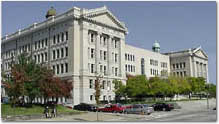
Last spring some of my colleagues and I dropped by Douglass for a visit with that staff member I mentioned. He prepped us for the madness we were about to see but I think we were all shocked by the almost eerily quiet hallways. Students were in classes and it looked like they were learning something. Is this the Frederick Douglass Steele saw? My co-worker was amazed at the difference, almost embarrassed that his horror stories suddenly seemed completely fictional.
In the article, I read that Douglass has been making tremendous improvements in the last two years and it looks like people are starting to notice. I guess HBO hasn't had the chance to come back and do a follow-up documentary on the successes the school has had.
I can't help but wonder if a little positive propoganda couldn't turn educators on to the charm of Charm City schools...
Friday, March 6, 2009


No More Bubbles!
No Child Left Behind has forced our schools to place an incredible amount of importance on standardized tests. There is so much riding on the scores our students receive; it is hard not to feel the pressure when you walk into a school building during the month of March. Is the pressure reserved just for the students, who are actually completing the test? In my experience, the entire staff feels the extreme pressure of ensuring that our students succeed and score as high as possible on their exams.
As an elementary school teacher, it is painful to watch my students stress themselves out over filling in the right bubble. I have a wonderful group of 6 and 7 year olds who must bear the burden of completing a 4 day long standardized test (the Stanford 10). Every morning for a week, they are forced to sit in rows and fill in bubble after bubble for over an hour. It seems like so much time is spent preparing for the tests and we are losing valuable time for meaningful learning experiences. The time we have spent tutoring and taking practice tests could have been much better spent exploring new reading strategies, finding different ways to solve 5 + 7, or experimenting with magnets.
The stress my students feel is further expressed through my own stress as their teacher. I want my students to do well; I want them to show everyone that they are intelligent and talented students regardless of their home lives and situations. We are so quick to assume that children of low income, high-need communities are not as talented as their peers from “better” communities. I have spent the past 6 months giving my students every possible educational opportunity I can and I know they are prepared for their test. I know that my students have the skills to succeed; I just hope that the stress we have placed on them doesn’t hold them back from doing their best.
It kills me to watch my little first grades spend hours completing mindless work, filling in bubbles, when I know they should be up and exploring the word around them. So, just like the post below, I’m wondering how young is too young? And, how much time are we wasting with all this testing?
As an elementary school teacher, it is painful to watch my students stress themselves out over filling in the right bubble. I have a wonderful group of 6 and 7 year olds who must bear the burden of completing a 4 day long standardized test (the Stanford 10). Every morning for a week, they are forced to sit in rows and fill in bubble after bubble for over an hour. It seems like so much time is spent preparing for the tests and we are losing valuable time for meaningful learning experiences. The time we have spent tutoring and taking practice tests could have been much better spent exploring new reading strategies, finding different ways to solve 5 + 7, or experimenting with magnets.
The stress my students feel is further expressed through my own stress as their teacher. I want my students to do well; I want them to show everyone that they are intelligent and talented students regardless of their home lives and situations. We are so quick to assume that children of low income, high-need communities are not as talented as their peers from “better” communities. I have spent the past 6 months giving my students every possible educational opportunity I can and I know they are prepared for their test. I know that my students have the skills to succeed; I just hope that the stress we have placed on them doesn’t hold them back from doing their best.
It kills me to watch my little first grades spend hours completing mindless work, filling in bubbles, when I know they should be up and exploring the word around them. So, just like the post below, I’m wondering how young is too young? And, how much time are we wasting with all this testing?
Thursday, March 5, 2009
How Young Is Too Young?
With Stanford 10(the state test for first and second graders in Baltimore City) right around the corner I found myself in a grade level meeting today panicking about the test that will begin Monday the 9th. The administration was asking me and the other first and second grade teachers if we and our students were ready. “I sure hope so,” I replied. Six pairs of eyes stared at me and I couldn’t help but feel frustrated and annoyed that so much pressure is placed on our students to perform well. My students are six and seven years old! That is too young to be tested.
There are so many outside factors that affect our students’ scores. On a practice Stanford 10 my class took last week I had one of my brightest girls miss an entire section of reading questions because she came to school upset about a fight she had got into with her grandmother that morning. Because of this she refused to try and left several questions blank and randomly answered the rest. Her test, along with any other student having a bad day, is not true reflection of what they know but a reflection of how difficult their home lives are.
At our meeting this week we discussed the concept that many of our students are passing the first grade but are bombing the city benchmarks. I am more concerned with how my students are doing in first grade with first grade curriculum than whether they can decode the very difficult Stanford 10. There are so many more important life skills and concepts I want my students to grasp. Instead we have been cramming for the test.
We’ve planned a parent meeting last minute to discuss making sure your child is prepared on test day, sent home extra homework packets focusing on test prep, planned parties for post-Stanford 10 in an effort to motivate students to try their best and almost anything else to prepare our students. While I think we are as ready as we can be, why do I still feel like our scores may be outside of our control? And at this point I find myself saying I really can’t worry about it anymore. The test is Monday. My students are what they are. The test is what it is. I just wish my students could be valued for more than being basic, proficient or advanced.
There are so many outside factors that affect our students’ scores. On a practice Stanford 10 my class took last week I had one of my brightest girls miss an entire section of reading questions because she came to school upset about a fight she had got into with her grandmother that morning. Because of this she refused to try and left several questions blank and randomly answered the rest. Her test, along with any other student having a bad day, is not true reflection of what they know but a reflection of how difficult their home lives are.
At our meeting this week we discussed the concept that many of our students are passing the first grade but are bombing the city benchmarks. I am more concerned with how my students are doing in first grade with first grade curriculum than whether they can decode the very difficult Stanford 10. There are so many more important life skills and concepts I want my students to grasp. Instead we have been cramming for the test.
We’ve planned a parent meeting last minute to discuss making sure your child is prepared on test day, sent home extra homework packets focusing on test prep, planned parties for post-Stanford 10 in an effort to motivate students to try their best and almost anything else to prepare our students. While I think we are as ready as we can be, why do I still feel like our scores may be outside of our control? And at this point I find myself saying I really can’t worry about it anymore. The test is Monday. My students are what they are. The test is what it is. I just wish my students could be valued for more than being basic, proficient or advanced.
Tuesday, March 3, 2009
Shove This Up Your AYP
The bees are buzzing, the snow is melting, yes, friends, it is that time of year. The MSA is in the air. I feel as though we have begun a mad sprint in the midst of a marathon. I am constantly evaluating, myself and my students. Who is ready? Do they really understand inferencing? Do my BCRs look anything like the state "standard"? My students have started evolving into walking As, Ps, and Bs. The pressure is mounting. My school has always made AYP, but this year the bar is even higher and with so many schools closing and dumping their students on our doorsteps, I don't know if we will make it.
It is a double-edged sword; however, because I question, how can we NOT make it. The MSA is the only place in the world where 33% is considered proficient. I know I demand higher scores for my students in my own classroom, but the truth is, all a student has to get on the MSA to be considered proficient is one out of every three questions. In my mind, these floor low standards are shameful. But if they are really floor low, why are we struggling so to meet them?
I cannot help but wonder if suburban schools feel the same stress that my school feels. And even if they do, I have to question, whose stakes are higher? I have to assume the middle and upper class students in the county are more confident going to to the exam, as their prior knowledge is higher. They know what a SAUCER is. They have seen a MAPLE tree. They have music programs which introduce them to SAXOPHONES. My students don't just have to find the answer, they have to figure out what in the world the question means.
Last year, my students scored 81% advanced and proficient in reading (compared to last year's 54%) and 93% advanced or proficient in math (last year's 77%). Dundalk Middle School is the nearest county school and here students scored 56.8% proficient or above in math and 77.3% proficient or above in language arts. Does this mean city schools are a better place to be? I would argue that education is not limited by one's placement in the city or the county, but the capabilities of the teachers in the classroom.
It is a double-edged sword; however, because I question, how can we NOT make it. The MSA is the only place in the world where 33% is considered proficient. I know I demand higher scores for my students in my own classroom, but the truth is, all a student has to get on the MSA to be considered proficient is one out of every three questions. In my mind, these floor low standards are shameful. But if they are really floor low, why are we struggling so to meet them?
I cannot help but wonder if suburban schools feel the same stress that my school feels. And even if they do, I have to question, whose stakes are higher? I have to assume the middle and upper class students in the county are more confident going to to the exam, as their prior knowledge is higher. They know what a SAUCER is. They have seen a MAPLE tree. They have music programs which introduce them to SAXOPHONES. My students don't just have to find the answer, they have to figure out what in the world the question means.
Last year, my students scored 81% advanced and proficient in reading (compared to last year's 54%) and 93% advanced or proficient in math (last year's 77%). Dundalk Middle School is the nearest county school and here students scored 56.8% proficient or above in math and 77.3% proficient or above in language arts. Does this mean city schools are a better place to be? I would argue that education is not limited by one's placement in the city or the county, but the capabilities of the teachers in the classroom.
Sunday, March 1, 2009
Attention to Attendance
Throughout this school year, there has been a dramatic call to attendance. My administration has threatened that inaccurate attendance data can ultimately result in losing your job. BCPSS truancy teams echoed these warnings in professional development meetings as well. Our CEO wanted us to get students back in school in order to boost attendance. All of these actions draw attention to attendance data and its relevance in the school setting.
It is obvious that kids cannot learn unless they are in school, but by knocking on their home doors is not going to change attendance problems. I believe that accurate collection of attendance data is a tool to better understand how dire attendance problems are, but ultimately we need to figure out why students are not coming to school. At my school, we have a full-time position supposedly dedication solely to attendance. The school has also purchased technology that tracks students' entrance into the building and attendance for each class period. Even with these additional resources, our attendance is the worst in school history.
As a teacher, I am frustrated with the narrow focus on attendance. I constantly call students' homes in an effort to understand where students are at when they are not in school, but I do not feel as though this brings students back into the classroom. Overall, I think there are only a hand full of students who are chronically absent. I believe these cases should be handled by the additional support teams put in place to improve attendance. I rather focus on ensuring that the rest of my students improve upon their attendance and are in class daily.
The National Center for Education Statistics suggests coding each absence in an effort to see where students are when they are not in school (http://nces.ed.gov/pubsearch/pubsinfo.asp?pubid=2009804). I think this coding would give me a better understanding of the reasons why students miss school. Even though the coding would be time consuming, I would be able to look for patterns in the data and work with my teaching team to address specific reasons for missing school. By addressing the reasons students are absent, we would be able to improve behavior patterns and in turn raise attendance.
I want my students in class each day, but I do not believe the recent attention to attendance will change attendance patterns, only create sudden rises in attendance, followed by drops.
It is obvious that kids cannot learn unless they are in school, but by knocking on their home doors is not going to change attendance problems. I believe that accurate collection of attendance data is a tool to better understand how dire attendance problems are, but ultimately we need to figure out why students are not coming to school. At my school, we have a full-time position supposedly dedication solely to attendance. The school has also purchased technology that tracks students' entrance into the building and attendance for each class period. Even with these additional resources, our attendance is the worst in school history.
As a teacher, I am frustrated with the narrow focus on attendance. I constantly call students' homes in an effort to understand where students are at when they are not in school, but I do not feel as though this brings students back into the classroom. Overall, I think there are only a hand full of students who are chronically absent. I believe these cases should be handled by the additional support teams put in place to improve attendance. I rather focus on ensuring that the rest of my students improve upon their attendance and are in class daily.
The National Center for Education Statistics suggests coding each absence in an effort to see where students are when they are not in school (http://nces.ed.gov/pubsearch/pubsinfo.asp?pubid=2009804). I think this coding would give me a better understanding of the reasons why students miss school. Even though the coding would be time consuming, I would be able to look for patterns in the data and work with my teaching team to address specific reasons for missing school. By addressing the reasons students are absent, we would be able to improve behavior patterns and in turn raise attendance.
I want my students in class each day, but I do not believe the recent attention to attendance will change attendance patterns, only create sudden rises in attendance, followed by drops.
Saturday, February 28, 2009
Voice
In my mailbox this past week was a letter of congratulations for helping Maryland achieve its status as the state with the BEST schools in the country. The rest of the day was spent seeing everything that would suggest otherwise.
My main question was: how? How could we possibly be so high, when most of us working in the city could rattle off failing schools like old friends? To see the breakdown, you need only log into Ed Week, where they give you state report cards and everything (Ed Week's Report). Maryland is right on top with Massachusetts for overall. Its two lowest scores are in The Teaching Profession (a 72%, making us 28th), and Standards, Assessments, and Accountability (an 83.9%, making us 25th). We are top ten in the other categories: Chance for Success (88.2%, 5th), K-12 Achievement (82.5%, 2nd), Transitions and Alignment (96.4%, 1st), and School Finance (85.4, 9th).
I wasn't able to find much on how the ratings were done, but the question remains: How can a state whose major city had the fourth-worst drop out rate in the country last year--how can that state be #1? (Graduation Rate)
So maybe it's just statistics, right? Maybe Baltimore isn't significant enough to really drop the overall score.
Let's talk stats.
Here are some population numbers for Maryland: Baltimore City has a population of about 650,000. If you add up the next 12 biggest cities in Maryland, their combined population is about 710,000. (City Populations). So, just talking cities, we've got just about half the population covered.
If we move out to state-wide, Baltimore's 650,000 is now pitted against about 5,600,000. We're still talking 11.6% of the state's population.
Granted, not all of the city schools are bad. But not all of the county schools are that great either. Run over to PG county and look for #1, tell me what you find; numbers-wise they add another 820,000 to the mix, raising our total to 1,470,000, or roughly 25%. (County Populations)
City schools can't be doing that bad, though, right? Again, let's find some data.
Here's an article on how great we're doing on our AP tests. The lowest county score is 21.9% of students passing AP tests; we have 2.7%.
Again, 21.9% vs. 2.7% (and the highest one is 31.4%, if you wanted to know).
The city's graduation rate last year was 34%. Fourth-worst nationwide.
State test scores? Look at this table, and notice the only two scores in the 60's: Baltimore City (65%) and Prince George's (64.5%). (HSA Scores).
But let's not talk about that. Let's not achievement levels in reading or math. Let's not talk about transportation or food or after school programs or soccer fields with bent goals and football games where you can't see the players through the dust. Let's not talk about students getting their tongues cut off in a cafeteria, getting stabbed on school grounds, freezing in 30 degree classrooms, having only leaded water available to drink.
No, no. Let's talk about what's good. We got a 100% on Early Childhood Education! We got a 90% on College Readiness!
The problem is that nobody cares. During a three-part interview of Alonso, Baltimore's new CEO, the recent killing on school grounds comes up.
Here's why we're #1:
"Markel Williams, 15, was stabbed to death by a fellow student outside William H. Lemmel Middle School...All weekend, [Alonso] waited for e-mails from an angry public, calls from activists demanding change, cries from parents who didn't feel safe sending their kids to school anymore. They never came.... A poor black boy with disciplinary problems had been slain at a failing school. It was almost as though it was to be expected."
We have an entire sector of society that doesn't even get a phone call for a brutal killing in a school. Not one. If things aren't noticed for that, why would they be noticed for poor test scores, failing graduation rates, systemic corruption and absolute failure to provide any reasonable education to students?
These things go unseen. Worse yet, they are ignored. They are consciously ignored. How can Maryland celebrate anything when this is going on?
In my mailbox, I'm told we're number one. In my classroom, my ninth grade students are on average at a 5th grade math level. Maybe 10% of all my students (9-12, now) can divide. My 4th grade word problem drills wreak havoc on every class.
I would like to see what schools were rated. I would like to know what Education Week looked at when they gave Maryland its grade. I would like to know what they did not include.
We are #1 because we ignore the 650,000 that make us shudder. We have our pride because we forget those who need the most, because we have accepted that this is the way things are. We are the best because every day we let people live and die unseen. Voiceless.
My main question was: how? How could we possibly be so high, when most of us working in the city could rattle off failing schools like old friends? To see the breakdown, you need only log into Ed Week, where they give you state report cards and everything (Ed Week's Report). Maryland is right on top with Massachusetts for overall. Its two lowest scores are in The Teaching Profession (a 72%, making us 28th), and Standards, Assessments, and Accountability (an 83.9%, making us 25th). We are top ten in the other categories: Chance for Success (88.2%, 5th), K-12 Achievement (82.5%, 2nd), Transitions and Alignment (96.4%, 1st), and School Finance (85.4, 9th).
I wasn't able to find much on how the ratings were done, but the question remains: How can a state whose major city had the fourth-worst drop out rate in the country last year--how can that state be #1? (Graduation Rate)
So maybe it's just statistics, right? Maybe Baltimore isn't significant enough to really drop the overall score.
Let's talk stats.
Here are some population numbers for Maryland: Baltimore City has a population of about 650,000. If you add up the next 12 biggest cities in Maryland, their combined population is about 710,000. (City Populations). So, just talking cities, we've got just about half the population covered.
If we move out to state-wide, Baltimore's 650,000 is now pitted against about 5,600,000. We're still talking 11.6% of the state's population.
Granted, not all of the city schools are bad. But not all of the county schools are that great either. Run over to PG county and look for #1, tell me what you find; numbers-wise they add another 820,000 to the mix, raising our total to 1,470,000, or roughly 25%. (County Populations)
City schools can't be doing that bad, though, right? Again, let's find some data.
Here's an article on how great we're doing on our AP tests. The lowest county score is 21.9% of students passing AP tests; we have 2.7%.
Again, 21.9% vs. 2.7% (and the highest one is 31.4%, if you wanted to know).
The city's graduation rate last year was 34%. Fourth-worst nationwide.
State test scores? Look at this table, and notice the only two scores in the 60's: Baltimore City (65%) and Prince George's (64.5%). (HSA Scores).
But let's not talk about that. Let's not achievement levels in reading or math. Let's not talk about transportation or food or after school programs or soccer fields with bent goals and football games where you can't see the players through the dust. Let's not talk about students getting their tongues cut off in a cafeteria, getting stabbed on school grounds, freezing in 30 degree classrooms, having only leaded water available to drink.
No, no. Let's talk about what's good. We got a 100% on Early Childhood Education! We got a 90% on College Readiness!
The problem is that nobody cares. During a three-part interview of Alonso, Baltimore's new CEO, the recent killing on school grounds comes up.
Here's why we're #1:
"Markel Williams, 15, was stabbed to death by a fellow student outside William H. Lemmel Middle School...All weekend, [Alonso] waited for e-mails from an angry public, calls from activists demanding change, cries from parents who didn't feel safe sending their kids to school anymore. They never came.... A poor black boy with disciplinary problems had been slain at a failing school. It was almost as though it was to be expected."
We have an entire sector of society that doesn't even get a phone call for a brutal killing in a school. Not one. If things aren't noticed for that, why would they be noticed for poor test scores, failing graduation rates, systemic corruption and absolute failure to provide any reasonable education to students?
These things go unseen. Worse yet, they are ignored. They are consciously ignored. How can Maryland celebrate anything when this is going on?
In my mailbox, I'm told we're number one. In my classroom, my ninth grade students are on average at a 5th grade math level. Maybe 10% of all my students (9-12, now) can divide. My 4th grade word problem drills wreak havoc on every class.
I would like to see what schools were rated. I would like to know what Education Week looked at when they gave Maryland its grade. I would like to know what they did not include.
We are #1 because we ignore the 650,000 that make us shudder. We have our pride because we forget those who need the most, because we have accepted that this is the way things are. We are the best because every day we let people live and die unseen. Voiceless.
Friday, February 27, 2009
How Work-Study Can (And Can't) Support Learning
We are constantly reminded that our public education system must be improved so that America's children will grow up and be competitive in the global economy. This conclusion is well founded, and is just one of the reasons that work-study programs have been integrated into high schools across the country. Real world experience not only helps students make meaningful connections with the academic content, but also allows for the development of interpersonal and life skills.
However, my experience with work-study meant neither work nor studying. Instead, it was a course given to seniors who had completed all required courses and available electives. Without adequate staffing/resources to offer advanced coursework, these students were given multiple sections of work-study (many had expressed no interest in the program and were not currently employed). However, the schedule was made during the first week of school, so there was little time to find meaningful work for them.
Rather than engaging in true work-study, many of our brightest seniors began either leaving school early or resigned to mundane tasks around the building.
This is not a condemnation of work-study altogether; instead it is an urgent call for administrators to find programs that actually work to support learning. Perhaps most impressive has been the model used by the Cristo Rey Network, which operates more than a dozen Jesuit high schools across the country--one of which just opened in Fells Point. It is called the Corporate Internship Program (CIP) and was first created to make private, college-preparatory schools affordable for students in a low-income area of Chicago.
Cristo Rey soon discovered, however, that their program brought with it many other advantages. The CIP depends on more than 90 partnerships with reputable companies in downtown Chicago--including banks, law firms, and hospitals. Students work five days a month in entry-level positions and earn roughly 65% of their tuition, literally investing students in their own education. At the same time, they develop strong work ethic, network with business leaders, and gain valuable real world experience.
This is what schools should bring to the students of Baltimore City. Cristo Rey provides a strong example of how/why work-study can be a viable option that is integrated into high school curriculum. However, if students are going to compete in a global economy, their work experience must extend beyond making copies or washing boards. And that means schools must begin the search for positive community partners, all of whom share a stake in our children's future. The search must begin now.
My view is that our work-study program should either be eliminated or transformed into something like CIP at Cristo Rey. Only then will it live up to its name.
For More Information: http://www.cristorey.net/cwsp/overview.html
Thursday, February 26, 2009
I teach in the "smartest" state in the country
That's right. I teach in
O'Malley is quoted as saying, "if we want our students to compete in the global economy with students from Europe,
My takeaway from that is that overall
Wednesday, February 25, 2009
Walk A Mile In My Shoes
The first sentence of this article found on wbaltv.com on February 17, 2009, reads: “Baltimore Mayor Sheila Dixon put school violence at the top of her agenda Tuesday after paying a visit to one of two high schools that were the scenes of recent stabbings.” Really? So school violence is at the top of her agenda for one day. Hmm…not so sure one day is enough to make a difference. Stabbings and other forms of violence have been going on in Baltimore before these recent incidents, yet that Tuesday it was at the top of the list. I have always said that people have no clue what another profession is like until they experience it. This is a prime example. You read headlines all the time about school violence, and then on some random ‘Tuesday’ the mayor or some other elected official decides they want to show face and ‘hear’ what is happening in the schools. The problem with this is that when schools have notice that an elected official or some other big wig is coming to the school, the administration pulls out all the stops to make it appear as if everything is ok. Instead of being exposed to the problem, it’s actually covered up, and no one really knows what’s going on. What officials need to do is pop up at schools and truly spend a day or maybe even a half day to really see what its like. Students are assaulted everyday; many times nothing happens. Teachers are also often taken advantage of and left with no recourse. People need to truly see what goes on from day to day, and maybe then they will feel a sense of urgency to make some much needed changes.
On both ends, people need to see that there are hard working teachers who come in everyday, ready to execute great lessons, but are often thwarted by disrespectful students or interrupted time and time again by announcements and meaningless ‘meetings.’ On the other hand there are also those teachers who come in, pass out worksheets, and collect a check. Those students, in this case are being short changed. Something needs to happen; soon. Again, no one really knows what it’s like to be a teacher in Baltimore City until they experience it.
On both ends, people need to see that there are hard working teachers who come in everyday, ready to execute great lessons, but are often thwarted by disrespectful students or interrupted time and time again by announcements and meaningless ‘meetings.’ On the other hand there are also those teachers who come in, pass out worksheets, and collect a check. Those students, in this case are being short changed. Something needs to happen; soon. Again, no one really knows what it’s like to be a teacher in Baltimore City until they experience it.
Tuesday, February 24, 2009
Can small classes make the difference?
In the continuing debate over class size, New York City Mayor Michael Bloomberg recently remarked, “It’s the teacher looking a child in the eye, and teachers can look lots of children in the eye,” he added. “If you have to have smaller class size or better teachers, go with the better teachers every time.” While there is nothing more immediately important for the education of a child than an effective teacher, the value of small class sizes cannot be ignored, especially given that having a more manageably sized class can boost the effectiveness of a struggling teacher.
In my two years teaching in a Baltimore City public high school, I have had classes ranging in size from thirteen to thirty-two students. Class size has made all the difference in my ability to maintain order, provide differentiated instruction, and give immediate feedback to best meet my students’ needs. While it was a rare occasion for all thirty-two students to make it to class on the same day (typical attendance for my largest class was about twenty-eight students), I found any number nearing thirty relatively difficult to manage, even if I could handle the same students in a smaller group without problem. More experienced teachers would also benefit from the additional interaction with each student and reduced workload allowed by a smaller roster, even if they do not face the same struggles with discipline that I do.
As the article notes, there are potentially significant drawbacks to a shift to small class sizes (e.g., the creation of an even greater shortage of highly qualified teachers in urban districts) even when there has not been a clear correlation between class size and student achievement. Despite the fact that studies have shown that better performing schools often have larger class sizes, these schools typically serve a student population that doesn’t as desperately need the intensive remediation, support, and air-tight discipline that a small class environment can more readily provide.
Ideally, we should have great teachers in small classrooms throughout Baltimore; however, we know that precious few teachers in this system ever reach greatness. The question remains, how many passable teachers could become good; how many good teachers could become great, if provided with the resources to succeed?
In my two years teaching in a Baltimore City public high school, I have had classes ranging in size from thirteen to thirty-two students. Class size has made all the difference in my ability to maintain order, provide differentiated instruction, and give immediate feedback to best meet my students’ needs. While it was a rare occasion for all thirty-two students to make it to class on the same day (typical attendance for my largest class was about twenty-eight students), I found any number nearing thirty relatively difficult to manage, even if I could handle the same students in a smaller group without problem. More experienced teachers would also benefit from the additional interaction with each student and reduced workload allowed by a smaller roster, even if they do not face the same struggles with discipline that I do.
As the article notes, there are potentially significant drawbacks to a shift to small class sizes (e.g., the creation of an even greater shortage of highly qualified teachers in urban districts) even when there has not been a clear correlation between class size and student achievement. Despite the fact that studies have shown that better performing schools often have larger class sizes, these schools typically serve a student population that doesn’t as desperately need the intensive remediation, support, and air-tight discipline that a small class environment can more readily provide.
Ideally, we should have great teachers in small classrooms throughout Baltimore; however, we know that precious few teachers in this system ever reach greatness. The question remains, how many passable teachers could become good; how many good teachers could become great, if provided with the resources to succeed?
Monday, February 23, 2009
What Is Too Much To Say?
Recently a school therapist was charged with sexually molesting a 13 year old middle school student. The story was reported locally, including a story by the Baltimore Sun (http://www.baltimoresun.com/news/local/baltimore_county/bal-md.co.cw.molest18feb18,0,6313649.story), and at least somewhat nationally (it was included in a Massachusetts’s newspaper). There is no doubt that this is a tramatic event with a multitude of people being affected, each with their own unique reaction to this event. Perhaps it is fear, hate, anger, disbelief, or betrayal. An entire volume could be filled. I would like to discuss, however, the media coverage of this story.
If you read the above website, and view the attached video clip, you should notice how extremely detailed the story is. In fact, details straight from the police report describing the exact act are present. Then, the school where the accused worked was stated. I ask, “is this too much to say?” Was it not enough to report that a school therapist is accused of molesting a 13 year-old child and is currently in jail? Did we need to know exactly what they were doing, and where, and how many times it had happened before? Did the school where he worked at have to broadcast to the city? Maybe they did need to be included. Maybe the school was included so parents won’t automatically think that the accused worked at their child’s school. Maybe media’s need to report what is sensational (and horrible) drove the editor’s decision. Maybe the implications of including these details were just never discussed.
As educators we are always looking out for the best interests of our students. So, what about the student in this story? What are the implications of this news coverage for him? Will his peers find out that it was him (the school has a relatively small population and word usually travels fast in that type of setting)? What are the implications for that school? Would you want to send your child there? What are the implications for the staff of that school? How did this happen with someone they worked with every day?
I offer only questions and not answers. These questions, however, I believe are important to contemplate and discuss so that situations that may occur in the future are addressed in an appropriate manner. Personally, I don’t know if this one was.
If you read the above website, and view the attached video clip, you should notice how extremely detailed the story is. In fact, details straight from the police report describing the exact act are present. Then, the school where the accused worked was stated. I ask, “is this too much to say?” Was it not enough to report that a school therapist is accused of molesting a 13 year-old child and is currently in jail? Did we need to know exactly what they were doing, and where, and how many times it had happened before? Did the school where he worked at have to broadcast to the city? Maybe they did need to be included. Maybe the school was included so parents won’t automatically think that the accused worked at their child’s school. Maybe media’s need to report what is sensational (and horrible) drove the editor’s decision. Maybe the implications of including these details were just never discussed.
As educators we are always looking out for the best interests of our students. So, what about the student in this story? What are the implications of this news coverage for him? Will his peers find out that it was him (the school has a relatively small population and word usually travels fast in that type of setting)? What are the implications for that school? Would you want to send your child there? What are the implications for the staff of that school? How did this happen with someone they worked with every day?
I offer only questions and not answers. These questions, however, I believe are important to contemplate and discuss so that situations that may occur in the future are addressed in an appropriate manner. Personally, I don’t know if this one was.
Sunday, February 22, 2009
money, money, money, money, money, MONEY!
On Friday, Governor O'Malley announced that he would be withdrawing the changes in education funding formulas that took so much money out of our school system. Apparently Baltimore City Schools will see $84 million dollars more than projected but the funding formulas that were already in place will remain the same, including the Thornton Law. The Baltimore Sun applauds O'Malley for his committment to education, including a quote from a member of the Board of School Comissioners stating, "I had great confidence that the governor would continue his strong support of the progress in City Schools and I am very appreciative of the Baltimore City delegation for making this their top priority this year." While I understand that the governor is the figurehead for all that happens within his government, I don't think he had a choice. If I remember my World News correctly, the state had to restore funding cuts as a result of this stimulus plan. If education really was his committment would he have cut so much from the budget in the first place? And is he replenishing all of this money because he is being held responsible for allocating his funds? While a public official taking credit for something they didn't do is hardly surprising, the fact still remains that we now have $84 million dollars for the city schools that we didn't have before. My question is, will any of us see this money? Will all the talk of jobs being lost and schools closing down stop? I know it won't make a difference in my school. In class last week we were talking about small schools and the possibility of tearing down the big complexes and making new, smaller buildings. Seems to me that you could build a lot of small schools with $84 million dollars that you didn't think you would have. At the very least you could fix up the ones you do have so I don't hear about a school closing every day on my way to work because of a lack of heat, or water, or electricity. I would like to hear what O'Malley and Alonso plan to do with the money now that we have it. I don't know if withdrawing the changes to the funding formulas is what needs to happen. Maybe we just need to make different changes.
Reasons To Hope For Increased Rigor
With the national standards movement codified in No Child Left Behind, schools are facing a challenge to implement increased rigor in classrooms across the country in order to prepare students for the "global economy" and more directly for the standardized tests that hold schools accountable for student progress. While he testing is an obviously debatable notion, I believe that the increased call for rigor in the classroom is absolutely in the best interest of students, and there is mounting evidence that this call is being answered nationally, in Maryland, and beginning to be addressed in an increasingly systematic way in Baltimore.
A national education publication titled "The Progress of Education Reform" (published by the Education Commission of the States) focused its most recent article on the growth in the number of students taking and the number of schools offering dual credit programs that allow high school students to simultaneously earn credit toward high school and college. The article primarily focused on ways to fund these programs; however, the growth of programs like Advanced Placement, International Baccalaureate, and concurrent enrollment is a promising statement about education's rise to the call to provide challenge and rigor in classrooms.
Maryland has recently been hailed in a number of publications for its growing number of students enrolled in Advanced Placement courses, taking AP exams, and the highest statewide passage rate on these exams in the country. (See link at the end of the article.) Despite this good news, the AP Annual Report discussed the fact that minority students, particularly African American students, are still underrepresented in terms of both those taking and passing the exams. If we consider the fact that so many African American students in this nation have been left behind in terms of rigor up until now, this cannot be a surprising fact; however, the Advanced Placement program has begun giving grants to schools in Baltimore City to increase AP offerings. These grants are called 3+3 because the goal is to add three AP course offerings to the school's curriculum over the next three years. This is exciting news, but initially seems to offer no guarantee that students in Baltimore City's most struggling high schools will be able to access the course content, even if their school received one of these prestigious grants. At least, this was my initial worry. It turns out thought that this grant actually provides funding for teachers who will not teach a AP to attend professional development workshops provided by the AP team in order to increase rigor in ALL classrooms and courses throughout the school, which will provide better preparation for AP courses when students reach their junior and senior years. The most recent of these workshops, which was attended by all faculty members from my high school (which has received a grant) offered clear and useful strategies for defining, scaffolding, and achieving increased rigor in all classes. Teachers left the workshop with real tools, fresh ideas, and a strong desire to work together to implement these in their classrooms. All of this evidence seems to provide a real hope for the increased rigor that our students need in order to increase their mastery, passage rates on the HSA, and ability to complete beyond the wall of their particular high school. The key now is to take time to plan, implement, and evaluate these strategies through departmental and faculty collaboration. Let's hope it happens!
http://www.usnews.com/blogs/on-education/2009/2/4/maryland-ranks-no-1-in-ap-tests success.html?s_cid=rss:on-education:maryland-ranks-no-1-in-ap-tests-success
Saturday, February 21, 2009
Welcome to the new face of urban education Baltimore
Two week ago, I took a select group of my 10th grade Biology students on a field trip to the National Aquarium in Baltimore. Our group consisted of 20 students, myself, and a community member from Federal Hill who had volunteered to chaperone. As we sat eating lunch before heading back to school, the chaperone commented on how different the demographics of the group were this year than last year. “It seems like you have many more Hispanic students this year,” he said, referencing the five Spanish-speaking students who had come with us. I agreed with him and explained that this year I had a class of 15 ELLs (English Language Learners). I explained to the chaperone that there did seem to be an increase in immigrant students at our school in general. He said it seemed unusual that we still “had immigrants coming into this country at this day and age.”
I held my tongue. I wanted to point out that immigrants are STILL entering the country, and STILL looking for work and education. It seemed pretty naïve and narrow minded to think that immigration in the United States magically disappeared after a certain time period. Clearly, the fact that so many ELL’s were in my classroom, from different countries like Honduras, Mexico, Liberia, Guinea, and the Congo, proved that immigration had not halted. But later, I began to think of his comment within the context of Baltimore City. Most immigrants seemed to gravitate towards major metropolises such as New York or Los Angeles. These are cities where established ethnic populations from every country around the world already exist. What did it mean, then, that Baltimore City was experiencing an increase in immigrants? What would a typical Baltimore City classroom look like in 10 years? How would the needs of students who barely spoke English, were illiterate in their native languages, and had no prior access to formal education be met? These were the challenges I was currently facing with the ELL’s in my own classroom.
A recent New York Times article (link at the end) profiled a secondary school dedicated to such immigrant students. In Ellis Preparatory Academy, students not only face the challenges of learning content, but also a new language, how to read, and sometimes, how to learn – in high school. How do you meet all of these demands? Ellis Prepartory succeeds because of committed teachers who want to work with immigrants, because the state of New York allots more money to immigrant students to help them bridge these gaps, and because of its small school size. But who would serve these students in growing immigrant urban centers like Baltimore where such a demand is not recognized? Of course there are ESOL programs throughout the city, but people seem to forget that learning English is an ongoing process. And an immigrant student does not enter school only at the elementary school level – many high school students are immigrants too. How do you ever “catch them up”?
When people think of “urban education,” most automatically picture poor, black students. Historically, Baltimore fits the stereotypical picture of urban education pretty well. But the face of urban education is rapidly changing to include more immigrants. There are more questions than answers about how to accommodate these students at this point, much like this post. Welcome to the new face of urban education Baltimore.
I held my tongue. I wanted to point out that immigrants are STILL entering the country, and STILL looking for work and education. It seemed pretty naïve and narrow minded to think that immigration in the United States magically disappeared after a certain time period. Clearly, the fact that so many ELL’s were in my classroom, from different countries like Honduras, Mexico, Liberia, Guinea, and the Congo, proved that immigration had not halted. But later, I began to think of his comment within the context of Baltimore City. Most immigrants seemed to gravitate towards major metropolises such as New York or Los Angeles. These are cities where established ethnic populations from every country around the world already exist. What did it mean, then, that Baltimore City was experiencing an increase in immigrants? What would a typical Baltimore City classroom look like in 10 years? How would the needs of students who barely spoke English, were illiterate in their native languages, and had no prior access to formal education be met? These were the challenges I was currently facing with the ELL’s in my own classroom.
A recent New York Times article (link at the end) profiled a secondary school dedicated to such immigrant students. In Ellis Preparatory Academy, students not only face the challenges of learning content, but also a new language, how to read, and sometimes, how to learn – in high school. How do you meet all of these demands? Ellis Prepartory succeeds because of committed teachers who want to work with immigrants, because the state of New York allots more money to immigrant students to help them bridge these gaps, and because of its small school size. But who would serve these students in growing immigrant urban centers like Baltimore where such a demand is not recognized? Of course there are ESOL programs throughout the city, but people seem to forget that learning English is an ongoing process. And an immigrant student does not enter school only at the elementary school level – many high school students are immigrants too. How do you ever “catch them up”?
When people think of “urban education,” most automatically picture poor, black students. Historically, Baltimore fits the stereotypical picture of urban education pretty well. But the face of urban education is rapidly changing to include more immigrants. There are more questions than answers about how to accommodate these students at this point, much like this post. Welcome to the new face of urban education Baltimore.
In School for the First Time, Teenage Immigrants Struggle
http://www.nytimes.com/2009/01/25/education/25ellis.html?_r=2&scp=5&sq=immigrant%20students&st=cseFriday, February 20, 2009
Replacing Defeatism with Self-Empowerment
“…I fundamentally think that the reason there is violence [in the schools] is as much about people not loving the kids as about lack of capacity or the spillover from the outside." --Dr. Andres Alonso
This quote from the recent Baltimore sun series on the CEO really struck me. It was so in line with conversations I have had with administrators at the high school where I work and with my recent experiences helping seniors with their
This defeatism became apparent to me when, after encouraging a senior to try to spell a basic word without asking for help, she said, “How do you know I can do it when I don’t know I can do it?” She and other students create self-fulfilling prophecies by telling themselves (and others) that they can’t do it or don’t understand… but when they are persuaded that this is a negative and false mindset, they do great things; most importantly, they are proud of themselves for doing what they thought was impossible. In the past few weeks of working with these students on their projects, I have learned how far sincere encouragement can go and how much the students truly appreciate it. While I can only imagine how difficult it would be to erase such a detrimental mentality from an entire class, I know that I will be cognizant of it in my own classroom when I teach next year. I hope that educators and reformers acknowledge and incorporate some of the less tangible but crucial aspects of an effective education into their own ideas and practices.
Consider the Benchmark.
I teach 9th grade English at a citywide school where the English Benchmark Assessments, administered once per quarter, are a primary means of evaluating English teacher effectiveness, a kind of catch-all accountability tool that simultaneously answers the questions Are they learning? and Are they teaching? The January Benchmark featured two reading selections that rated, according to the Flesch-Kincaid Readability Test, somewhere between an 8th and 10th grade reading level. This presents a significant problem for many of my students, and it highlights one of the most glaring issues plaguing Baltimore City Public Schools: low student reading levels.
Consider X., an overage 9th grade student in my English classroom at a citywide school. He’s a future basketball standout whose enormous, spindly hand swallows my own when we greet each other at the door with a handshake. X. does not have an IEP, but his independent reading level, according to various diagnostics I have administered, falls somewhere between first and third grade, which puts him roughly six to eight years behind his peers. He’s operating with the same reading skills as a first grader.
Unsurprisingly, X. bombed the January Benchmark, scoring a meager 20.8%. When we went over students’ scores in class, X. told me that he’d guessed randomly because he simply couldn’t understand the questions or the answer choices.
X. is hardly the exception. According to one diagnostic I have used this year, my students read, on average, just below a 4th grade reading level. A different metric rates the average of all three classes at a beginning 6th grade level. The first measure I mentioned also rates about 10% of my students at a 1st grade reading level, while another 10% slot in higher than 8th. There is an obvious and wide disparity in students’ reading ability levels within my classes, though somewhere between 4th and 6th grade is a fair approximation of average class reading level. This means that, on average, my students are taking a test to determine how well they are learning English that features lengthy reading selections roughly four to six years above their independent reading level.
This is of course deeply infuriating, frustrating, and depressing. X. had literally never read a book from cover to cover in his life until we read (with a lot of help from an audio version) Elie Wiesel’s Night in class. X’s reading experience and ability reflect poorly on everybody involved in his educational life – his teachers, administrators, counselors, &c. I’m stumped as to how I should teach a lesson to a student like X. (who cannot read aloud words like “several” and “straight”) while I simultaneously teach Z. (a student who reads Poe for fun during independent reading time and asks me what words like “atavistically” and “clairvoyance” mean) and then ask them to demonstrate their understanding on the same assessment.
Worst of all is the question that ultimately rises whenever Baltimore’s crushing systemic inadequacies are exposed: what can we do as a community to fix this? I only know that it has to begin with us refusing to socially promote students to the next grade who simply cannot read, and that has to begin in early education.
We already know that the kids come as is. Until we start finding better methods of holding teachers, students, and community members accountable for student learning, they’re going to keep coming underprepared, and we’re going to continue having immense difficulty getting them where they need to be. Realistically, there's very little that I can do as a 9th grade English teacher for a student who is reading at a first grade level. X. has been lost in the shuffle for eight years. We're in the state with the best achievement on Advanced Placement tests in the nation, and yet many of our ninth graders cannot even comprehend the questions on tests designed merely to check in to ensure that they're learning something. How do we fix this?
Consider X., an overage 9th grade student in my English classroom at a citywide school. He’s a future basketball standout whose enormous, spindly hand swallows my own when we greet each other at the door with a handshake. X. does not have an IEP, but his independent reading level, according to various diagnostics I have administered, falls somewhere between first and third grade, which puts him roughly six to eight years behind his peers. He’s operating with the same reading skills as a first grader.
Unsurprisingly, X. bombed the January Benchmark, scoring a meager 20.8%. When we went over students’ scores in class, X. told me that he’d guessed randomly because he simply couldn’t understand the questions or the answer choices.
X. is hardly the exception. According to one diagnostic I have used this year, my students read, on average, just below a 4th grade reading level. A different metric rates the average of all three classes at a beginning 6th grade level. The first measure I mentioned also rates about 10% of my students at a 1st grade reading level, while another 10% slot in higher than 8th. There is an obvious and wide disparity in students’ reading ability levels within my classes, though somewhere between 4th and 6th grade is a fair approximation of average class reading level. This means that, on average, my students are taking a test to determine how well they are learning English that features lengthy reading selections roughly four to six years above their independent reading level.
This is of course deeply infuriating, frustrating, and depressing. X. had literally never read a book from cover to cover in his life until we read (with a lot of help from an audio version) Elie Wiesel’s Night in class. X’s reading experience and ability reflect poorly on everybody involved in his educational life – his teachers, administrators, counselors, &c. I’m stumped as to how I should teach a lesson to a student like X. (who cannot read aloud words like “several” and “straight”) while I simultaneously teach Z. (a student who reads Poe for fun during independent reading time and asks me what words like “atavistically” and “clairvoyance” mean) and then ask them to demonstrate their understanding on the same assessment.
Worst of all is the question that ultimately rises whenever Baltimore’s crushing systemic inadequacies are exposed: what can we do as a community to fix this? I only know that it has to begin with us refusing to socially promote students to the next grade who simply cannot read, and that has to begin in early education.
We already know that the kids come as is. Until we start finding better methods of holding teachers, students, and community members accountable for student learning, they’re going to keep coming underprepared, and we’re going to continue having immense difficulty getting them where they need to be. Realistically, there's very little that I can do as a 9th grade English teacher for a student who is reading at a first grade level. X. has been lost in the shuffle for eight years. We're in the state with the best achievement on Advanced Placement tests in the nation, and yet many of our ninth graders cannot even comprehend the questions on tests designed merely to check in to ensure that they're learning something. How do we fix this?
Thursday, February 19, 2009
What's happened to the "learning" part of service learning?
To receive a Maryland high school diploma, students are expected to complete seventy-five hours of service learning. According to MSDE, service learning experiences should be linked to academic learning, benefit the community and require students to actively reflect on their experience. In some schools throughout Baltimore City, students are given service learning hours for experiences that meet few, if any, of the criteria detailed by MSDE. I am most concerned with the lack of learning associated with the activities that students are completing for service learning hours.
At my school, students are given service learning hours for washing boards or putting chairs on top of desks. In October, during breast cancer awareness month, a teacher led a campaign to raise money and promised students 3 hours of service learning for each dollar donated. What are students learning from this? That they can “buy” their way out of civic responsibilities. Students now have a warped idea of what service learning is and schools are perpetuating this by continuing to grant students hours for activities that meet none of the criteria established by MSDE.
Service learning needs to be revamped in the city. We owe it to our students to ensure that they are having meaningful experiences outside of the classroom. The article I have attached describes how Baltimore City College has infused service learning into their classes. If each class made service learning a component of the class the experiences would hopefully be meaningful and should definitely be linked to academics. I think that schools should consider making service learning a requirement in classes.
http://www.education-world.com/a_curr/curr187.shtml
At my school, students are given service learning hours for washing boards or putting chairs on top of desks. In October, during breast cancer awareness month, a teacher led a campaign to raise money and promised students 3 hours of service learning for each dollar donated. What are students learning from this? That they can “buy” their way out of civic responsibilities. Students now have a warped idea of what service learning is and schools are perpetuating this by continuing to grant students hours for activities that meet none of the criteria established by MSDE.
Service learning needs to be revamped in the city. We owe it to our students to ensure that they are having meaningful experiences outside of the classroom. The article I have attached describes how Baltimore City College has infused service learning into their classes. If each class made service learning a component of the class the experiences would hopefully be meaningful and should definitely be linked to academics. I think that schools should consider making service learning a requirement in classes.
http://www.education-world.com/a_curr/curr187.shtml
Wednesday, February 18, 2009
What's on your report card?
As a teacher in a
The school board tabled the vote for
While less specifically, but maybe more importantly, how was the school able to suspend this many students, at least once, without someone from
I’m asking a lot of questions here, because I think they are interesting points for discussion, but really, I have my own suspicions of what the answers might be, and a lot of you probably do too. One question I don’t have an answer to: What are The Green School, Rosemont Elementary, and ConneXions doing that MATHS is not and how/can whatever it is be replicated?
Filtering the Internet - Hindering Engagement
Before Dr. Alonso’s recent live chat, readers of the Baltimore Sun education blog, Inside Ed, were asked to submit questions for the CEO. Inside Ed received 45 submissions (which you can read here) seven of which discussed BCPSS’s Internet filter, often referred to as Bess. Just a month before the live chat, another lengthy discussion had taken place on Inside Ed about the Internet filter and the uselessness of TSS. Based on the length of these conversations and the number of interested parties (including teachers, parents, and central office staff), I think it’s fair to say that the Internet filter is a hot topic in Baltimore. Unfortunately, for reasons unknown to me, it was not a topic that was discussed during the live chat -- even though almost 20% of the Inside Ed submissions discussed it.
Teachers in Baltimore are more than ready to use technology to engage students and teach technology literacy. English teachers want their students to blog about reading Shakespeare; math teachers want students to make music videos about calculating the surface area of a pyramid; Social Studies teachers want to use Google image search to find historical photos to show students. We want to access lesson plans written by teachers across the country or the world. We want to show our students interesting videos and audio clips. We want our students to use the Internet to research interesting topics.
Not only does appropriate use of technology engage students and “hook” them into content, but technology literacy is an essential skill that schools must teach, particularly because so many of our students do not have access to a computer or the Internet at home. While my students are experts at designing myspace pages, they need real practice performing research. However, as “veteran teacher” notes in the Inside Ed comments, the filter “won't allow students to research breast or prostate cancer and yet will allow them to research the NBA statistics at their leisure.”
Teachers in Baltimore must be able to bypass the filters so that we can access educational YouTube videos, Google image searches, and blogs (like this one!) while in the school building. When planning lessons at school, teachers must be able to access the resources that will help them create the best possible lesson for students. When planning lessons at home, teachers need to be sure that the videos or images that they plan to show students are actually accessible once they get to school.
Let’s face it – I know that many of my students will never use the Pythagorean Theorem again after they finish geometry (although they should because it is AWESOME). What I’m more interested in is making sure that my students have every door of opportunity open to them after they graduate. With the Internet filter blocking so much useful content, my students will not be as technology savvy as their peers in the county, and so I’m sending them into the world already a step behind. That’s no way to start.
Teachers in Baltimore are more than ready to use technology to engage students and teach technology literacy. English teachers want their students to blog about reading Shakespeare; math teachers want students to make music videos about calculating the surface area of a pyramid; Social Studies teachers want to use Google image search to find historical photos to show students. We want to access lesson plans written by teachers across the country or the world. We want to show our students interesting videos and audio clips. We want our students to use the Internet to research interesting topics.
Not only does appropriate use of technology engage students and “hook” them into content, but technology literacy is an essential skill that schools must teach, particularly because so many of our students do not have access to a computer or the Internet at home. While my students are experts at designing myspace pages, they need real practice performing research. However, as “veteran teacher” notes in the Inside Ed comments, the filter “won't allow students to research breast or prostate cancer and yet will allow them to research the NBA statistics at their leisure.”
Teachers in Baltimore must be able to bypass the filters so that we can access educational YouTube videos, Google image searches, and blogs (like this one!) while in the school building. When planning lessons at school, teachers must be able to access the resources that will help them create the best possible lesson for students. When planning lessons at home, teachers need to be sure that the videos or images that they plan to show students are actually accessible once they get to school.
Let’s face it – I know that many of my students will never use the Pythagorean Theorem again after they finish geometry (although they should because it is AWESOME). What I’m more interested in is making sure that my students have every door of opportunity open to them after they graduate. With the Internet filter blocking so much useful content, my students will not be as technology savvy as their peers in the county, and so I’m sending them into the world already a step behind. That’s no way to start.
Tuesday, February 17, 2009
Gangs and City Schools... Whose responsibility?
The high school where I teach has had a police officer give a presentation about gangs twice – once to the faculty, and once at Back-to-School night. While informative, as it explained gang issues across the city, how to recognize telltale signs of gang involvement, and who to contact if you suspect a child is involved in a gang, it stopped short of offering possible solutions to the epidemic. And, while I was pleased to see that my administration was taking this problem seriously enough to arrange for the presentation, I was disheartened by what appeared to be the end of the dialogue on gangs at our school. No one talked about what we, as a school community, were going to do in order to discourage students from joining gangs. No one brought up ideas for engaging the students in a discussion about gangs, or how to combat their appeal by providing a safe and nurturing learning environment. No one suggested creating additional after-school activities to give our students alternatives instead of being out on the streets.
But my school isn’t the only one who is reluctant to shoulder the responsibility of keeping kids out of gangs. In fact, in the recent series of articles in The Baltimore Sun about Dr. Alonso, the City Schools CEO, had a forceful response when asked what schools were doing about the problem.
"How is it the responsibility of the school system to deal with gangs?" he snapped. "Gangs are not in the schools. Gangs are being formed on the outside."
"They're in the schools," the great-grandmother said.
"I know, and we have a responsibility," he shot back. His next few sentences were disjointed as he tried to regain his composure.
We're missing the fact that it is a community conversation," he said. "What are the parents doing?"
The audience clapped. He continued: "What are the students doing? What is everyone doing? It is so unfair to the professionals in the school to say, 'What are you doing about gangs?' Let me tell you what we're doing about gangs, now, let me tell you." He went on with a list, including gang awareness programs and more school police.
"The reason I'm responding with such passion," he said, "is because there's no way for me to predict whether one of my kids is going to get shot two blocks away from school in a gang-related incident. And, and, for anyone to suggest that this is the responsibility of the school system is a form of madness."
While I do agree that the prevalence of gangs – and young people joining them – is a community issue, and should be addressed at the community level, I do believe that we, as educational institutions, could be doing more. Why aren’t we offering more after-school programs, or weekend activities to keep kids off the streets? Why don’t we have in-school mentoring programs that tackle tough issues like gangs, drugs, and peer pressure? Why aren’t we bringing more positive role models into our schools? Why aren’t we, by our actions, saying to our children, “We care about you and want you to be safe and make good decisions?”
This Sunday’s cover story in The Baltimore Sun talked about how gang members are turning themselves around with the help of counselors and places including the Rose Street Community Center. Though I doubt that schools would invite former gang members like Tony Wilson to talk to students, I think the idea of bringing the issue to the forefront is imperative. As teachers, we see the gang symbols written on our desks and notebooks; we see the handshakes in the hall; we see the colors being worn – but are we content to accept it as a part of city life, to wash our hands of it because it is a “community” issue?
Someone once told me that by teaching in the City, you must be willing to take on the role of a teacher and a parent, because unfortunately, the reality is that too many of our students do not have stable home environments. Effective teachers of urban students will step into the role of a caring adult who is a strong role model. If the community is not willing to step up and fight for our kids, then maybe the schools need to… before it is too late.
After all, if our students do not have places where they can seek advice and discuss alternatives before they join a gang, what choice do we expect them to make? Most young people who become gang members are looking for a family, for something to belong to, and for some form of community. If they do not have this at home, and if we could provide this at school, maybe, just maybe, we would see a decrease in gang activity. It’s a long shot, yes, but at this point, I think it’s worth trying.
But my school isn’t the only one who is reluctant to shoulder the responsibility of keeping kids out of gangs. In fact, in the recent series of articles in The Baltimore Sun about Dr. Alonso, the City Schools CEO, had a forceful response when asked what schools were doing about the problem.
"How is it the responsibility of the school system to deal with gangs?" he snapped. "Gangs are not in the schools. Gangs are being formed on the outside."
"They're in the schools," the great-grandmother said.
"I know, and we have a responsibility," he shot back. His next few sentences were disjointed as he tried to regain his composure.
We're missing the fact that it is a community conversation," he said. "What are the parents doing?"
The audience clapped. He continued: "What are the students doing? What is everyone doing? It is so unfair to the professionals in the school to say, 'What are you doing about gangs?' Let me tell you what we're doing about gangs, now, let me tell you." He went on with a list, including gang awareness programs and more school police.
"The reason I'm responding with such passion," he said, "is because there's no way for me to predict whether one of my kids is going to get shot two blocks away from school in a gang-related incident. And, and, for anyone to suggest that this is the responsibility of the school system is a form of madness."
While I do agree that the prevalence of gangs – and young people joining them – is a community issue, and should be addressed at the community level, I do believe that we, as educational institutions, could be doing more. Why aren’t we offering more after-school programs, or weekend activities to keep kids off the streets? Why don’t we have in-school mentoring programs that tackle tough issues like gangs, drugs, and peer pressure? Why aren’t we bringing more positive role models into our schools? Why aren’t we, by our actions, saying to our children, “We care about you and want you to be safe and make good decisions?”
This Sunday’s cover story in The Baltimore Sun talked about how gang members are turning themselves around with the help of counselors and places including the Rose Street Community Center. Though I doubt that schools would invite former gang members like Tony Wilson to talk to students, I think the idea of bringing the issue to the forefront is imperative. As teachers, we see the gang symbols written on our desks and notebooks; we see the handshakes in the hall; we see the colors being worn – but are we content to accept it as a part of city life, to wash our hands of it because it is a “community” issue?
Someone once told me that by teaching in the City, you must be willing to take on the role of a teacher and a parent, because unfortunately, the reality is that too many of our students do not have stable home environments. Effective teachers of urban students will step into the role of a caring adult who is a strong role model. If the community is not willing to step up and fight for our kids, then maybe the schools need to… before it is too late.
After all, if our students do not have places where they can seek advice and discuss alternatives before they join a gang, what choice do we expect them to make? Most young people who become gang members are looking for a family, for something to belong to, and for some form of community. If they do not have this at home, and if we could provide this at school, maybe, just maybe, we would see a decrease in gang activity. It’s a long shot, yes, but at this point, I think it’s worth trying.
Subscribe to:
Posts (Atom)