Saturday, March 28, 2009
Are We Reforming for the Right Reasons?


Perception Versus Reality
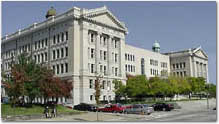
Last Friday, at Northwestern High School, an unfortunate series of events took place during the first lunch period. A community conflict that had erupted earlier in the week boiled over and was finished in the cafeteria. This fight was quickly contained and the instructional day continued with only minimal interruption. If you had been watching the news or reading the paper over the next few days, none of the positive actions by the staff were reported. The caption from WJZ news that evening said “Police Swarm School After Dozens of Girls Brawl.” If you knew nothing about Northwestern High School, but you saw that caption, you might think that these events were commonplace with an ineffective staff.
Left out of the story, was the swift reaction of staff and administrators to contain the fight. Left out was the fantastic performance of other students who did not allow the fight to destroy the rest of the school day. Left out were all the gains that have been made in the atmosphere of the school. While I am not an apologist or attempting to cover-up what took place, I would ask that a fair picture of the progress made in our school be presented. As a teacher at Northwestern, I can say that had this happened last year, the day would have been a waste.
Though one would have assumed that I would have been saddened by the events last Friday, I actually left the school that day extremely proud of my students. With a room full of upperclassmen, my students stayed on task, finished their work, and maintained a lightheartedness that made the extra hour in our room seem like no time at all. My students went to lunch during the second period, and as I walked them down to the cafeteria, I was amazed that it looked as if nothing had happened. Students maintained their composure and went about eating their lunches.
I use the events at Northwestern to comment on how we view violence throughout our school system. Unfortunately, for many of the communities surrounding our schools, violence and gangs are commonplace. As teachers and school staff, we are extremely limited to what we can control outside of school. Additionally an unenforceable cell phone ban and weak discipline code, leave administrators at a disadvantage. We know that strong consequences are not going to eliminate school violence; there must be a systemic change of culture. In most cases, a change in school culture can take approximately four to five years to take full effect. If we know that systemic cultural change takes so long, can we really blame faculty and administrators for setbacks along the way? More resources must be placed in schools for anger management, counseling, and conflict resolution. While our ultimate goal as educators is to make events like last Friday a thing of the past, we must acknowledge the reality that they may happen no matter what. Rather than unfairly place blame, we should celebrate swift action and competent management in the face of crisis.
Thursday, March 26, 2009
The False Specter of Teacher Quality
The school reformers ignore the external determinants of teacher quality and purport that a teacher’s quality is largely within their own control. While the days of a one-room schoolhouse with the teacher acting as the principal, secretary, and social worker are gone, reformers trumpeting “teacher quality” conceptualize the teacher’s classroom as an island, disconnected from the complex organization characteristic of modern schools.
A quick search in Education Week confirms the focus on teacher quality over principal quality. The phrase “teacher quality” appears over seven times as often as “principal quality (216 articles vs 14). Many influential leaders in education, including Michelle Rhee, the Superintendent of DC Public Schools embrace this narrow, inaccurate perspective on teacher quality. She has pledged to “purge incompetent teachers by any means necessary” (Ripley, 2008). Perhaps what’s most misguided about Rhee’s approach is her behaviorism-like understanding of teacher competence. Oddly, by her own admission, she started off teaching doing a very poor job. She became competent. A teacher’s abilities in the classroom are not fixed.
Teachers can also appear more competent when they’re external environment is conducive to success. In a school beset by behavioral problems, poor organization, abysmal communication, and a dearth of an instructional vision, how can a teacher’s competence be evaluated? There are too many negative, external factors affecting that teacher’s success to blame students’ low achievement on the teacher alone.
A far more important contributing factor to student achievement is strong school based leadership. Reformers need to begin campaigning for better leadership within schools. Good leaders recruit good teachers, improve mediocre teachers, and work to fire the hopelessly underperforming teachers. They also tend to the external factors that contribute to teacher success. By directing their efforts towards school based leadership, reformers would be helping to increase student achievement.
Wednesday, March 25, 2009
What is the point?
During one of our Professional Development days, the math teachers were all sent to be trained on how Bridge Projects work. In my school, only the Department Head and one other teacher deals with advising the projects, so until this PD I was unaware of what this process included. To my surprise, the PD was not filled with useful tips on how to get the students motivated to do the projects, but rather was a session on how teachers can give students the answers to the "project" (really it's just an extended work packet) without legally giving them the answers. We were told that as an adviser, we should be giving students the exact questions with different numbers, work the problems out, as well as write out any explanations needed. This can be used as a "reference" for the student as s/he completes the project.
Frankly, I don't see the point of this project. The student's are still not mastering the skills they clearly need. They are merely being taught how to copy off another page properly. I understand the concept of modeling for a student, but how does this assess whether or not the student understands the concept being tested? Students taking the real HSAs do not get problems worked out for them. I feel as though the state is trying to find a loophole from failing the 8% of students. If you are going to have a standard such as HSAs, do so. Stick by it. Fail 8% because they are not ready to leave high school, because they have not accomplished the skills the state has deemed necessary for graduating. Do not just let them pass by completing some make-up work packet the students copy off of their teacher. What is the point of that? What is stopping them from removing the middle man and have the teacher just write it out themselves while signing the students name? The responses on these projects aren't the words or thoughts of the student, but rather the teacher. There is no actual understanding being demonstrated.
So someone please tell me, what is the point of these Bridge Projects? Help students understand material? Or a way for the state to avoid failing mass numbers of students and looking like an educational failure?
Tuesday, March 24, 2009
The teacher-in-chief speaks - The Economist 14-03-09
In the March 14, 2009 edition of The Economist I read an article entitled “The teacher-in-chief speaks” that can be viewed at www.economist.com/world/unitedstates/displaystory.cfm?story_id=13279059 . This article was about Obama’s speech and all of the issues we have discussed so far in class from rigors of standardized testing, merit pay, teacher quality, charter schools, and vouchers.
I think this all are serious issues that apply to the Baltimore City Public School system and cannot be ignored. I know that my school receives Title I money from the government, but how that money is used is not often in the students best interests. Baltimore City Schools have a large amount of Federal money thrown at them, but miss manage it and use it for things that ultimately do not promote closing the achievement gap.
I think that in order for the BCPSS system to change, the reforms at the Federal level must be stronger and have a longer lasting influence than those of the past administrations. There is momentum being built to close the discrepancies between state standards as well as getting bad teachers out of the classroom. Baltimore City needs supports in place to keep the good teachers who demonstrate student achievement in the classroom while working to eliminate the teachers that do not perform to expectations.
The Missing Piece
Recently though, I find myself frustrated with unanswered efforts to communicate with parents and families. I am a tutor with an after school program run at my school and several of my students are in the tutoring program. I have a student who displays negative behavior daily and she is in the afterschool program. She and I have a special relationship and she was showing improvements from spending extra time with me not only for academics but behavior. I offered to drive her home after the program so she could stay and I had been doing this for a few weeks. Her sister and mom came up today and ever so kindly told me they didn’t want me driving her home anymore. It really hurt my feelings. It hurt me even more to see my girl walking out the door with her mom almost in tears because I couldn’t drive her home. I felt all my efforts to help this student went down the drain with this small act.
I don’t ever want a parent to feel that I am overstepping my boundaries on their parenting skills. It is obvious that this child needs a lot of extra attention and help. I just wish that this specific parent and others like her would more readily realize the good intention of teachers in the city. In a perfect world teachers and parents would work together without any feelings of animosity. For now, I’ll make do with what I’ve got.
Monday, March 23, 2009
What about the administrators?
Sunday, March 22, 2009
Another Look at Obama's Speech on Education
The bad: much of his speech reinforced the high stakes, low quality assessments that have become ubiquitous in public education. They provide incomplete and inaccurate information which is used to make important decisions. Everyday I witness the harms of high stakes testing on the children who need our most support. The MSA and other tests like it reduce the educational experiences of children and turn schools into test-prep factories.
Parts of Obama’s speech were factually inaccurate. He stated that the United States had “fallen to 9th” in the world, whereas in reality the U.S. had to make substantial gains to rise to 9th. On the same test in 1995 the United States was ranked 23rd out of 41 countries. Maybe international comparisons are significant benchmarks by which to gauge our success. But this misuse of data rings of the Bush era when misleading scare tactics became common-place in order to promote the administration’s agenda.
Obama also spoke of the merit pay meme, which will likely come to Baltimore in some form sometime soon. People can have reasonable disagreements and ardent debates about merit pay. But one thing is clear, in survey after survey fully certified teachers that leave the profession state that the primary forces driving them out of education were infringements on their creativity and autonomy within the classroom, not low pay. This is not to say that teachers should not be paid more, but rather that merit pay is simply not successful at what it purports to do. Here are the educational historians David Tyack and Larry Cuban: “The history of performance-based salary plans has been a merry-go-round. In the main, districts that initially embraced merit pay dropped it after a brief trial.” More on why merit pay has not historically worked is available here. In short, merit pay would exacerbate the problems that manifest with high stakes testing, leading to an even less-rich educational experience.
Many in education circles that I am a part of poorly formulate the measure by which we should judge Obama’s policies. We need to go beyond just asking ourselves, “Is he better than Bush?” Yet, even by the Bush measure, we have cause to worry.
There's much more to be said about Obama's educational policy initiatives, but this is already too lengthy. Before these policies become reality in Baltimore, we need to take a hard look and go beyond talking about rigor in the classroom. We also need to be rigorous in the evaluation of proposed initiatives. Too much has been discussed and promoted without careful examination. Simply being pro-reform, regardless of the particular reform, will not serve the children of Baltimore.
I will end with quoting one educational pundit Gerald Bracey talking about another: “Diane Ravitch, never once called a bleeding-hear liberal and assistant secretary of education for George H. W. Bush, recently said that, from what she's seen, Obama is a third term for George W. Bush and Arne Duncan is Margaret Spellings in drag. She was not doling out compliments to either man.”
HB 630: The Key to Restoring Respect in Schools?
One student who I had not seen since the beginning of first semester reappeared in class last week. Although his family had been notified of his absenteeism and he had been on at least two short-term suspensions during the first semester, my principle is bending over backwards to develop a plan for him to graduate, complete three bridge projects in three days (just in time for tomorrow’s submission deadline), take three classes on Novell this semester, and get mandatory make-up work packets so that his first semester grades can be changed. Honestly, this has me heated! When are we going to stop giving chance after chance? We are demonstrating to our students that it is ok to be late, to come to school once in a while, do little to no work, and to be flagrantly disrespectful, because in the end, there is no accountability.
Perhaps HB 630 will restore some of the accountability that has been lacking on the parent/guardian side. As for our schools, it is high time we stop pretending the majority of our students are prepared and ready to go to college or go into the workforce. We need to show our students we care by holding high expectations. All of these chances only illustrate that we are pushovers (many times forced to act this way because of an unsupportive administration). The respect that is lacking can only be restored when we actually demand it and lead by example.
http://www.gazette.net/stories/02262009/lanhnew172109_32481.shtml
Saturday, March 21, 2009
Will Obama's Pillars of Reform Work in Baltimore City?
His speech focused on five pillars of education reform: early childhood iniatives, better assessments, rewards for outstanding teachers, innovation, and providing education to all. Although all made sense, the one that stood out for me was innovation. He showed particular interest in supporting charter schools and reforming the school year calendar. Are American Schools ready for this? Is Baltimore City School System ready for this?
I agree that the reasons for having summers off no longer apply to most American children. I don't think any of my students spend their summers farming and tending to their families' land. However, this cultural shift would be huge for my students, their families and teachers. Many of my students and their families would have a difficult time with this simply because of the drastic change. Vacations, childcare, and custody issues would certainly come into play. I would predict that the first few years' attendance would be poor. And what about the teachers? Yes, the students would forget less and yes, the shift to the next grade would be smoother. But what about us? Summers off are not only a time for us to recharge our batteries for the next year, but they are also a time for professional development. I would be interested in what a survey of BCPSS teachers would say. I suppose I'm on the fence with this issue...I also worry about the economic cost to BCPSS. Many of the school buildings are not air conditioned properly and the cost to repair these buildings and air condition them would be quite expensive. Not to mention the cost of staffing and transportation.
My second concern is with the charter schools in BCPSS. Many of our charter schools are wonderful institutions and promote exactly what President Obama hopes to see in them: innovation, choice, and support. However, Maryland's charter school law is not strong and it would be unfortunate if our charter schools movement grew too fast. The paperwork involved in shifting students around Baltimore City is staggering. Many students move through three or four schools a year and this includes charter schools. I've been involved in too many situations involving special education students not getting the proper services because the paperwork was lost or had not arrived to a charter school (or other BCPSS public school). The paperwork doesn't ever catch up with the child. Important information is never learned about these students and in the meantime a year of education is lost. My hope is that Baltimore City Schools can make this shift towards innovation slowly and with a lot of thought. We must evolve with the movement instead of jumping right in and learning from some very big mistakes afterwards.
Friday, March 20, 2009
The Question of Safety in Public Schools
Today was the first day of spring and one of the topics that preoccupied my day was fighting in schools. For a blog about urban reform, this might seem like a minor issue when compared with unequal funding, crumbling facilities, and poor achievement. This said, when I look back at what school was like for me, fighting, especially the vicious fighting that I saw today, was not part of the situation.
I teach at a northwestern Baltimore public middle school that has experienced more than it’s fair share of tragedy from school violence. With the opening of spring and the conclusion of the first part of the MSA tests, I personally witnessed three terrible fights. Also today, eight female students were arrested at Northwestern High School after a fight that involved around 30 girls, and a middle school student at Booker T. Washington was arrested after a fight with a teacher (http://www.baltimoresun.com/news/local/baltimore_city/bal-northwestern0320,0,1818176.story). In conversations with my colleagues, a number of teachers mentioned that today, being the start of spring, was just the beginning for this kind of misbehavior. The sad part about what they were saying was not just that there is the potential for a great amount of physical violence in the school, but that it is part of an end-of-year status quo.
Some might attribute the violence faced by urban schools to the environment in which students are raised. Guerra, Huesmann, and Spindler (2003) conclude that witnessing violence in the community can create greater levels of aggression in students. While this may be true, accepting violent physical manifestations of higher aggression levels as part of urban public school status quo is both unacceptable and blatantly unjust. Not only might community environment influence the levels of violence of students, but so too does school environment and school climate (Welsch 2000). Personally, I experience a large amount of frustration with unfair or unexplained rewards and consequences. I constantly feel that the administration at my school is unclear and uncommunicative, that there is not a clear definition of unacceptable behavior, and that there is no consistency in response to misbehavior. Not only is the poor school climate fostered by this kind of behavior frustrating for students, teachers, and parents, but it also stands to be the culprit in school violence.
When thinking about urban reform in Baltimore City Public Schools, a strong judgment needs to be made about administrative policies and messaging of critical information to students. In order to have a chance to affect achievement gains and support the whole student, there needs to be a commitment to the examination of the issue of school violence. Clearly, either the policies in place now or the way in which they are being implemented in some public schools is ineffective. Without providing a safe environment for all students, how can schools hope to be havens for learning and growth?
Thursday, March 19, 2009
Texting Our Way to Safety
The idea of violence in our schools is scary, and I believe we should do all that we can to help our students feel safe in their learning environments. If it means purchasing metal detectors, hiring more school police officers, or putting more than one teacher in the most dangerous classrooms, then I say that we need to find the money. I realize that Mayor Dixon just announced major budget cuts citywide, but in an ideal world we’d have sufficient funds to create the best possible learning environments for all of our students. Students should never have to be afraid to come to school, regardless of where they come from. I think the text line is a good idea, in theory. However, in practice, it doesn’t have a good chance of working. Students are told that they may not have cell phones in school, and while many children don’t listen, countless teachers try to enforce that rule. Opening a text line is a direct contradiction of that rule and would give the students an excuse to whip out a cell phone whenever they felt like it. A student could just say that they felt threatened or unsafe and in reality be sending a text to their friend in the classroom next door. Further, I would be wary of prank texters. I think many teachers in our system are quite aware of the capacity of our students to elaborate on falsehoods just for entertainment value.
On the positive side, gearing a hotline towards students’ interests (we all know how popular texting has become!) could prove successful. If used in an appropriate way and outside of school hours, the proposed texting hotline may become a helpful avenue to increasing school safety.
Wednesday, March 18, 2009
Corporal Punishment... can I use that?
Budget Cuts...at the expense of what?
I respect that our mayor has to cut back on expenses. However, I can’t help but be a little angry. Dixon, indicted for perjury, theft and fraud, seems to be leaving less and less options for the children of this city...in the name of saving the budget. I think back to my own adolescence and how much I benefitted from having structured, safe, public places to go, such as libraries and recreation centers. Our city seems to be giving the message that it is not a civic duty to provide enriching leisure for our children. Where do they go as more and more public places close? What options will we leave them?
Monday, March 16, 2009
Some thoughts...
One issue that I have with the restructuring of the city’s schools is the philosophy behind 6-12 buildings. I personally believe that using a junior high school model to bridge elementary school with high school can be much more effective. In my opinion, 6th graders do not need to be in a school with 12th graders. It’s much too large of an age difference between these grades. From my personal experience working in a middle school, merging my school with a high school is NOT going to fix the greater problems that exist within the walls of my building.
Another question that I have behind the whole restructuring debate has to do with the quality of administrators that are leading our schools. Alonso has made it a point to actively cut the extra jobs that have cost our system…but what about cutting the poor administrators that are failing our schools? And just exactly how is he holding them accountable? Over the last two years I have been appalled at the lack of professionalism by some administrators that have had the pleasure of working under. I cannot fathom how some of these people get appointed as leaders of our schools. And this fact is acknowledged by a number of my fellow colleagues at different schools across the system.
In the end, I am no expert on the philosophy behind school structure; all I’m saying is that I think a junior high school model would be more beneficial to our system because it groups students within appropriate grade levels together. In addition, I am not an administrator; I’m merely saying that we have some leaders who should not be leaders trying to run our schools. But I am a BCPSS teacher, actually in the classroom every single day, teaching, trying to avoid the constant instability of this school system.
Thursday, March 12, 2009
Quality Control
I teach at Mervo, which if you have friends there know it's been going down the tubes as of late. The kids are out of control, and the teachers hate it there. We aren't supported by administration like many schools in this city. Teachers have been having issues that are common to most schools, but because we don't have an administration that can handle it thing escalate. Students are roaming the halls, smoking pot in the bathrooms, gambling/having sex in the stairwells and of course fighting constantly. It's Baltimore, it happens. I can control what happens in my classroom, I can get kids on task, get them seated, I can even break up a fight between the biggest of kids even being a small girl, but the things happening in the hallways I cannot control. That is where my administration is supposed to come in. They are supposed to support us by clearing the hallways, or at the very least implement rules that have teeth behind them so students don't feel as though nothing can touch them.
The first days of school we were told we can't suspend kids for any reason besides violent issues. We were told by our administrators, if something happens in your classroom it's your own issue. They wouldn't do anything but return the student right back to our classroom. How do you start a school year with rules like that?? If a student is disrespectful, fights with a student (but doesn't shed any blood), refuses to put away his/her iPod what are you supposed to do? They don't show up when I give them detention, they don't respond to parent phone calls, they don't respond to lowering their grades. They know, that no matter what, they can't get kicked out of school or suspended. Of course, the school is chaotic right now when you have rules with no real consequences. The teachers revolted, we all complained. We complain to our admins, to North Ave, some were ballsy enough to email Alonso himself.
North Ave has been in our building for weeks. Nothing has actually changed for the better. They put all of our admins on PIPs, which actually caused the students to riot and scream "F*ck North Ave right to their faces till they had to call in more police. Now North Ave's great solution is to have our admins put 50 out of 96 of us (Including me) on PIPs. I'm sure there are some awful teachers put on PIPs, but frankly I do not think our admins would be able to tell the difference between the good and the bad. Yes, I get the obligatory twice a semester observation but that is crap too. My department head walks in halfway through my lesson, looks around for 10 minutes, then leaves. What kind of observation is that? How can you really tell if I am a decent teacher, let a lone a teacher that needs to be put on a PIP based on that? The most frustrating part about this is that the admins know they have an awful way of evaluating us, which is why they picked the 50 teachers based solely on attendance. I have had 7 absences this school year. Some may say this is high, but then you realize I WAS HIT BY A CAR!!! Of course I took days off; I was in the hospital, my skull was exposed, and my foot was fractured. You try going back to work the very next day. This is apparently the case for many of the other teachers at my school. The teachers of Mervo haven't been the luckiest in terms of health. The teacher who took off because she has cancer= PIP, the teacher who had to take off to have bleeding cysts on her uterus removed=PIP, the teacher who was put on bed rest for a month after a painful back surgery=PIP. Thanks North Ave for not only pissing us off, but for making us feel like we are in the least supported environment possible. Where something that is already traumatic and hard to deal with makes you worry that you'll lose your job over it too.
Moral of the story...we need real quality control. We need admins who actually evaluate us appropriately, and North Ave. to stop requiring quotas for PIPs but rather have real solutions to real problems. We need the people in charge to be able to control the quality of the school and the quality of our teachers other than basing it off of an arbitrary thing such as legitimate absences.
Wednesday, March 11, 2009
Reorganization of City Schools
Simply put, Dr. Alonso plans to shut down several failing schools in order to make way for new charter schools and the expansion of successful existing schools. Among the closures are Lemmel Middle School, outside which a student was stabbed and killed in November, and Thurgood Marshall High School. Other schools, like Digital Harbor High School and the National Academy Freedom High School will expand.
My initial reaction to this plan is a mixture of optimism and intrigue. Baltimore City schools are struggling (no surprise to any educator in this system) and Dr. Alonso is aiming to bolster the entire system. However, this reorganization lacks an explanation for which schools are to be closed- and a solid rationale behind the expansion of other schools. In other words, can we truly expect that successful schools can assume a failing school as is proposed with National Academy Freedom and Dunbar Middle?
As educators, we want to know what elements of “failure” are being considered when schools are closed. Low test scores, poor attendance, and a shrinking graduation rate due to the newly imposed bridge plan are not unique to any one Baltimore City school, nor is optimism or a passionate desire to see students succeed a unique attitude among educators at all of these schools. I can only hope that the schools closed and expanded are as successful as the proposal hopes.
Merit Pay for Teachers
This point is raised by President Obama in a recent speech and the resulting media coverage. In this speech Obama argued that merit pay for educators should be implemented. I do believe that good teachers (those that find success in substantially raising student achievement) should be rewarded for their efforts and this is certainly a way to do it. I also believe that bad teachers should no longer teach. If they were getting paid less this would be an incentive for bad teachers to either improve their craft or leave the profession. I believe this would also improve the image and prestige of being a teacher. Too many times I have heard that teaching just doesn’t pay enough. If merit pay was implemented one could then earn a wage that was competitive to other professions, if they were effective in the classroom. I also believe that this would increase the overall quality of teachers since there would be more incentive to be an effective instructor.
Of course, though, I have some concerns. Specifically in Baltimore, would or how would the effectiveness of the school as a whole factor into an individual teacher’s merit pay? For example, a teacher could go to a well-functioning school with competent co-workers and administrators and find that they are extremely effective in increasing student achievement. That same teacher could also be employed in a school where factors outside of their classroom (school climate, poor administration, student attendance, ineffective staff, etc) are so prevalent that they greatly affect their effectiveness in a largely negative manner. Would this same teacher be paid differently in each situation? I imagine so since their effectiveness would be different. Is this fair for people in “bad” schools? Would these schools turn around once merit pay was implemented? Should principles also receive merit pay when their school is effective? How would “teacher effectiveness” be measured? Who would measure “teacher effectiveness”?
Obviously a whole host of issues arises when debating merit pay for teachers. A system-wide reform would no doubt have to occur for this to be effective and not bread corruption. None-the-less, it is certainly an enticing idea.
Tuesday, March 10, 2009
National Standards in Maryland Public Schools a Possibility
As we all know, President Obama recently passed a huge recovery plan. As part of that recovery package, $5 billion has been allotted for states that are interested in raising their academic standards. A handful of states, including Maryland, are projected to apply for grants that would give federal aid to act as guinea pigs in implementing new national standards. These standards are currently being worked on and written by a nonprofit group called Achieve. Achieve, which has been founded by governors and other business leaders, hopes to finish standards for math, reading, and writing by this coming fall.
The eventual hope is that once these national standards would be implemented, students test scores would be benchmarked against scores of international students. In addition, the idea is that students would improve their overall chance of being more competitive internationally as well as prepare students for college and careers. If Maryland were to adopt these new standards, the MSA would probably no longer be used. In its place, we would see new tests written collaboratively with other state school systems. I believe this to be an interesting prospect. While it would probably not be something that we could see instantly within the school system, I would be very interested in seeing how national standards affect student performance.
Sunday, March 8, 2009
A 21st Century Kind of Civics Education
Students at my school enter the building every day decked out in Obama garb (before they are subject to the uniform code, of course!), and seeing our president as an icon for inner-city students has made me wonder about the implications of this election. Surely there is profound cultural, ideological, and historical significance surrounding the election of our first African-American president, but does the recent attention given to our government mean that our students understand the processes by which Obama was elected and functions on a daily basis? Is the newfound hope in our country translating to an increased understanding of and desire to participate in democracy?
As the product of a hands-on, experiential government class in high school, I learned the value of interacting with our elected officials and community leaders, attending important political events, and volunteering in local campaigns and service initiatives. I got to see how the Constitution and structure of our government play out in current events and what my role in those events could be. I learned first-hand that I had a voice, and that what I had to say mattered. It saddens me to think that there are few, if any, similar opportunities for the students at the high school where I work. Despite the attention that Government receives as an HSA-tested subject, I fear that there is little practical application to the material that students are drilled about. The Bridge projects give real-world examples for concepts in government, but the most recent round of these projects were returned with only a 68 percent acceptance rate – the lowest of all four subjects. I strongly believe that tying this material to interactive experiences would allow students to see the importance of government and their views about it.