Saturday, October 13, 2018

Be careful of using students’ achievement data in educational research

The article about using data reminds me of a conversation on types of finals among my roommates. Two of my roommates are from the School of Engineer, and another one is from Carey business school. All of them have written examinations at the end of the semester, while I have three projects to present. At first, I was complacent because I don’t have to spend days and nights on rote learning. But after I read the article and reconsidered my process of each project, I regretted having such a superficial understanding of education research. I feel even harder to plan an educational program compared to written tests.

Hess (2008) explained three aspects of misusing data, which are using data in half-baked ways, translating research simplistically, and giving short shrift to management data. He also gave readers four suggestions to avoid the problems mentioned above (Hess, 2008, p.12). Previously, I thought students’ achievement data is vital for the assessment of a policy, or a teachers quality because, in my high school, teachers’ rewards are directly related to students’ academic performance. For example, my math teacher had more bonus as my class had higher average scores compared to other classes. Therefore, when I was thinking how to measure a teacher’s quality, a comparison between students’ previous scores and present scores is the first thought in my mind. However, my classmate was a little hesitated when I presented the idea. I was confused at that time because I believe the testing result is the most effective way for assessment. And now, Hess (2008) explained the reason that over-focusing on student achievement undermines confidence in management (Hess, 2008, p.13). Too many educators, including me, exaggerate the effect of student achievement data, while it just illustrates how students are faring. No matter that at least three methods are required when collecting data or making an assessment.

Besides, I was thinking about my own experience when I read the article. I was educated in China, whose educational system is exam-oriented. For example, when applying for college, American students have to take SAT, write personal statements, or maybe have interviews. But for Chinese students, we have only one standard, which is the college entrance examination. I am not saying that this kind of system is the worse in the world because there is no better way to realize education equity when dealing with a large population. But it does become a barrier for Chinese educators to come up with creative ideas to change the current situation.

I think the purpose of education is to develop students’ growth, such as cognitive development, academic achievement, and social-emotional status. For educators, academic achievement is the easiest ways to evaluate because we can see the tendency by quantity data. However, we cannot over-stress the importance of test scores. Is it necessary to collect student achievement data? Is it efficient to measure performance by using student achievement data? We have to ask ourselves before we conduct research.


Reference
Frederick M. Hess. (2008). The New Stupid. Retrieved from:
http://www.ascd.org/publications/educational-leadership/dec08/vol66/num04/The-New-Stupid.aspx


Wednesday, October 10, 2018

Respecting ALL Communities with Overcrowded High Schools


It's no secret that many schools in the Baltimore area are overcrowded. Baltimore County Public Schools recently held a series of community events in which the Interim Superintendent, Verletta White, met with students, families, and community members to discuss many issues, including possible solutions to currently overcrowded high schools. One of the most obvious solutions presented at the meeting was to redistrict schools to even out numbers. While this suggestion seemed acceptable to many BCPS community members, there was one area in particular that seemed to push back. 

The southwest side of Baltimore County has historically been a drastically economically and racially segregated area with very clear neighborhood lines. If you were to look at a map of Interstate 695, you would notice that moving from south to north, you would first enter the zoning district of Lansdowne High School, then Catonsville High School, then Woodlawn High School. It would be logical to assume that these neighborhoods blend into each other, and that if one school's demographics differed drastically from another, these schools would be on the opposite ends of this south-to-north spectrum. But if one were to compare the demographic data of these three high schools they would notice that that is not the case (see chart below). Catonsville has historically been able to maintain an affluent population, despite being wedged in between two less comfortable groups of neighborhoods.

Because of this, it should be no surprise that community members in the southwest area responded to a survey stating that their most important concern was to ensure redistricting impacted "the fewest number of students" rather than stating that their most important concern was to "reduce the overcrowding at high schools" as most survey responses in other communities stated.

At the community meeting—held at Catonsville High School—Interim Superintendent White was described by the Baltimore Sun as understanding that “communities in the Baltimore area feel a connection to their schools.”  Looking at the socioeconomic data from each high school, it seems more likely that communities in the Baltimore area don’t have as much of a connection to their high school as they do a fear of being placed in another high school.

Hopefully, as the suggested options are presented BCPS, will make a decision which benefits all students and their families, not only one neighborhood.


LANSDOWNE
CATONSVILLE
WOODLAWN
% OF FARM STUDENTS
60%
28%
61%
% OF CAUCASIAN STUDENTS
42%
53%
3%
% OF AFRICAN AMERICAN STUDENTS
29%
28%
78%
% OF LATINO STUDENTS
18%
5%
11%
TOTAL STUDENT ENROLLMENT
1338
1754
1409
*all information taken from the 2017 MSDE Report Card


Links:

Monday, December 18, 2017

Will TFA's New Influx Accelerate Student Achievement?

This week, Teach for America Baltimore announced a $1 million donation, given by local philanthropists Mark and Patricia Joseph. Being someone who has worked at mainly small non-profits over the years, this seems like a staggering donation; that is half the operating budget of an afterschool non-profit I used to work with. Given this extremely high number, I thought that TFA would give very specific, data-driven answers to what they will do with this donation -- instead, they gave a blanket answer of "providing intensive support" for first and second year teachers, and expanding their alumni network. 

I found this answer to be disappointing; and I think my disappointment has to do with my very conflicted feelings about TFA. For years, I have felt that TFA does a dis-service to students in inner-city public schools. Sending very ill-prepared, just-out-of-college, mainly white students into extremely tough schools spells a recipe for disaster; and a recipe for students having their education stalled with a teacher who barely knows the craft of teaching. 

But my recent experience with TFA, and this article, makes me wonder more if I should be re-thinking my stance. While I still believe TFA does not provide enough training from the on-set, TFA does have a very high retention rate of teachers in Baltimore after the first year (85%) and currently has over 150 teachers in Baltimore City right now, all of whom are rated effective or ineffective. On top of this, the corps is becoming decidedly less white; over 50% of TFA Baltimore members are people of color. Last year, I attended the TFA annual summit through my organization, and learned that over 60% of TFA alum stay in education. This made me think about all of the administrators and teachers I am surrounded by that are TFA alum. Some taught for many years, and some taught for few and then quickly moved into other roles within education; but all are people who I believe are absolute change agents in education.

Currently, more than 560 alumni work within the City Schools district. Perhaps I have been too harsh on TFA over the years; I would still like to know more about what they plan to do with this new money to support students directly, but I will keep the faith that they are going to do what is best for kids.

Wednesday, December 6, 2017

The Role of District

The community or district background of a school brings certain uniqueness to that school including student background, environment and even teachers' training. All issues we faced within a school cannot be isolated from its community. Then it comes to partnership reform. How to make the partnership program work more smoothly from a region's perspective. Auerbach believes that the production and practice of reformed policies should seek to balanced content, structure, and flexibility to promote greater reform sustainability.


A couple of two things in his article that mainly illustrated me are the attention to interaction among leaders and the flexibility of the reform, and these two things are highly related to each other. To keep the sustained interaction between leaders who are not hierarchical but collaborative and dialectical, we have to consider questions of reform flexibility. As we heard from NNPS, the local reform of partnership education does not have any power over school, family and district. After finding these districts that would like to cooperate with reform, we still need to pay attention to the flexibility. If reforms are too flexible, they may miss the base of further reform and diminish their potential to promote positive change. I read about how NNPS dwells between these two extremes by only setting up the theoretical and framework environment for real reform leaders in professional practice rather than prescribed activities with little room to accommodate differences in contexts. 

The reading also mentioned that as supporting the local leaders, reform developers and reform leaders should also consider how to cultivate the different dimensions of leadership that affect the implementation and sustainability of externally developed reforms. For example, district size, culture, and resources should be challenging the expertise of professions who support the reform and thus it should be considered in the dialogue about changing district priorities. To help with that, investigation with vivid aim could target at reform characteristics and dimensions of district leadership.

Reference
Auerbach, S. (2012). School leadership for authentic family and community partnerships: research perspectives for transforming practice. London: Routledge.

Structural effort to support collaboration and partnership in district level

I read an article addressed on the attempt and practice of school leaders and district leaders to reform the structure and how the experimental result reflected on those attempts and actions. It mentioned how contemporary leading educational scholars trying to reverse the power structure of school, family and community collaboration to make individuals and family themselves serve effectively in partnership education. Although they do not confront and traditional institutional structure of schools, they hope the system in a district level has the ability to help and serve them once the leadership or the power structure is not functioning. 

In the recent centuries the school turned to be the place with multiple disciplines and rules, especially in the area like Baltimore city where majority people believe schooling needs to be more strict. And the power classification between school, teacher and students, families are like hierarchy in military or government bureaucracy. However, while military product national defense and the bureaucratic system product civic production, the school's production, which is learning, cannot be evaluated and controlled like national defense material or GDP numbers. On the one hand, learning is self-reflected in a way that the educational outcome of students could be really independent from standard measurement. On the other hand, a strict power hierarchy system may limit the development of student by assigning them a specific role played in school. That is why Sander raised the question about the reform of school power hierarchy.

A new power hierarchy in school should base on the fact that school is not making students predictable and formatted. Such a transition is not only to increase priority onto the need of clients—students and families in the system. Also it required developing the capacity and connection of students and family in the process of educational implication. Although Sander's article has some general description, I am still wondering the specific operation they took and the organizational strategy specifically during that period of gap during the retreat of school power. 


Reference

Sanders, M. (2013). Collaborating for Change: How an Urban School District and a Community-Based Organization Support and Sustain School, Family, and Community Partnerships, 1693-1712. 

Saturday, November 18, 2017

Fox News: Punish the Parents of Absent Students?


An article written by Fox News’s Chris Papst about the rate of absence in Baltimore City Public Schools was brought to my attention when it was posted and discussed by my neighbors on a website called NextDoor. The article discussed the findings of PROJECT BALTIMORE which, according to their website, is “an investigative reporting initiative” that “examines the unique challenges that confront the Baltimore area’s public school systems” with “significant emphasis [...] placed on investigating the Baltimore City Public School System which spends large sums of money on education, but yields sub-standard test score and low graduation rates.”

The article is a not-so-subtle attempt at fear mongering, feeding into its readers fears about the perceived inherent dangers that come with the overwhelming black and brown students in Baltimore City Public Schools by immediately drawing a correlation between poor attendance rates and increased violent juvenile crime in the city. In an attempt to further demonstrate his point about the low attendance rates in BCPSS, Papst shared the attendance rates of surrounding counties Baltimore County, Howard County, and Anne Arundel. While these districts do have attendance rates between 15 and 19 percent higher than Baltimore City’s, the article does not mention that these “surrounding districts” are considerably whiter and more affluent (MD Report Card), two advantages that make it significantly easier to be a student who’s at school every day.

Literature about the connection between poverty and absence seems prevalent enough to be assumed as public knowledge, especially by those who work in, care about, and write about public education. This makes it all the more confusing that the suggestion for improvement that the article seems to be suggesting is that BCPSS and its school police enforce the state truancy law which “hold[s] parents accountable with up to $500 in fines or jail time.” In a city whose residents are daily fighting battles against institutionalized racism, extreme poverty, and purposeful and persistent segregation, how can fining the parents of students who are obviously already struggling be the answer?


Wednesday, November 15, 2017

Kindergarten Readiness in Baltimore City


As a kindergarten teacher, I collect a lot of data from within my classroom which demonstrates that students who attended a pre-kindergarten (or a high-quality early learning program) came into kindergarten with far more skills than their peers. These skills range from academic to social emotional skills. However, I have been wondering if there is more broad research to support what I see everyday. Additionally, I was saddened to see an article in the Baltimore Sun, which explained that across Maryland, in the 2016-2017 school year, only 43% of kindergarten students were considered “ready for school” by the Kindergarten Readiness Assessment (KRA) (Bowie, 2016). In Baltimore, the data is even more saddening. In Baltimore, only 38% of students “were considered ready for school” (Bowie, 2016). The KRA assessment is conducted one-on-one with a teacher and assesses each student’s early literacy, math, social foundations, and physical well-being skills. The KRA assessment has 50 items of data which a teacher must collect about each child. To see that only 38% of students in Baltimore City are considered “ready,” shows a huge gap already in the skills of our youngest incoming students.


To understand how this readiness (or lack of) affects learning in school, I sought out some longer range data to explain the impact. In April 2017, The Washington Post presented a summary article of a much broader study called: “What do we really know about the value of prekindergarten?” (Strauss, 2017). The larger study was conducted by a group of scientists to examine “evidence on the impact of state-funded prekindergarten programs” (Strauss, 2017). In the Washington Post article there is a link to the entire text of the study, which seeks to unpack and examine larger questions such as, “How can scale-up be improved? Should pre-K be targeted or universal?” (Strauss, 2017). Check the link below to read more.

To summarize, the study found, “the uniformly positive evidence of impact on kindergarten readiness, and the nascent body of ongoing inquiry about long-term impacts lead us to conclude that continued implementation of scaled-up pre-K programs is in order”(Strauss, 2017). The research acknowledges the struggle to measure long term impact of pre-kindergarten on student success later in life. It is challenging to keep track of students for long periods of time and to account for the other factors in a student’s life, which affect their learning (Strauss, 2017).


As Baltimore City grapples with its own questions of how to fund and address early learning needs of the students within our city, this report offers substantial argument that the Kirwan Commission (and other funding sources) should consider the importance of the quality pre-kindergarten experiences for the lives of our students and the health our city.


References


Bowie, L. (2016, December 05). Less than half of Maryland kindergartners ready for school. Retrieved November 15, 2017, from


Strauss, V. (2017, April 24). Analysis | What do we really know about the value of
prekindergarten? Retrieved November 12, 2017, from
https://www.washingtonpost.com/news/answer-sheet/wp/2017/04/24/what-do-we-really-know-about-the-value-of-pre-kindergarten/?utm_term=.5ac63a3ef76c

Saturday, November 11, 2017

Technology or Not…

NPR journalist, Barbara King, highlighted a college course that required very little of students…besides the abstinence of all technology and all verbal communication (King, 2017). The class was extremely popular, despite the mandated journaling, the need for handwritten communication and the lack of social media. This piece was written a month after King published a contrasting article about a professor that had built-in “technology breaks” for his students in hopes that these designated breaks would cause students to be more focused. King suggested that these classes were examples of how our everyday community and culture plays a significant role in creating norms for technology use.

So the question remains - what best practices should teachers be cultivating in their classrooms? It’s hard to decide whether technology is an asset or a hindrance. For teachers, technology has the potential of being an endless resource. For example, a Promethean board can enable teachers to create well-designed slides that captivate their students, while being environmentally friendly. I’ve witnessed preschool teachers use a Promethean to structure their entire day, having interactive slides prepared for each lesson and relying on it for transitions.

But when we place technology directly into the hands of our students, how beneficial is it? Does technology loose its effectiveness when it is not teacher-driven? Some researchers claim that passive technology use and screen time, especially for young children, is not beneficial and may even hinder the development of empathy (Aamodt & Wang, 20011). Yet in Baltimore County, each student has their own device that is used throughout the day. They use it during morning work and indoor recesses, and to take tests, write stories, play educational games and fill transition periods. In my experience, students want to use their devices regardless of the assignment or specified activity. Some students like to put on headphones and get into their own zone, whereas others sit in pairs and groups so they can interact with peers.

As helpful as technology can be for educators and as desirable as it may be for students, we may have to wait for more time to pass and research to be done before truly understanding its impact.


Aamodt, S. & Wang, S. (2011). Welcome to your child’s brain: How the mind grows from conception to college. New York: Bloomsbury.

King, B. J. (2017). Monks For A Month: College Kids Give Up Talking - And Technology. Retrieved November 09, 2017, from https://www.npr.org/sections/13.7/2017/11/09/562933725/monks-for-a-month-college-kids-give-up-talking-and-technology

Wednesday, November 1, 2017

Baltimore's School to Prison Pipeline

In my spare time lately, I have been reading The New Jim Crow, Michelle Alexander’s 2009 best-seller about mass incarceration in America and its creation of a new “underclass” comprised overwhelmingly of people of color. A professor recommended the book to me last semester, saying it was important for understanding the lives of many young people in Baltimore. Looking into the data on mass incarceration in Baltimore, the numbers are staggering. Baltimore holds only 10% of Maryland’s population, but 35% of the prison population. 96% of these prisoners are male, and 71% are black.

Even more disturbing is research showing that Baltimore’s school system compound these disparities from a very young age. In the 2016-2017 school year, Baltimore City suspended 6,778 students, including 413 Pre-K-1st graders and 1,942 2nd-5th graders. For every 100 African American students, there were 9.49 suspension incidents, while there were only 3 such incidents for all other races combined. Additionally, school police are stationed on many campuses, allowing students to be arrested for minor infractions during the school day. This has led to a number of disturbing violent incidents, and nearly half of surveyed students claim that the school police use excessive force. A statement from the U.S. Department of Justice adds that “the city routinely blurs the distinction between the BPD and school police in a way that undermines accountability and sets the stage for abuses.”

Fortunately, it does seem that Baltimore City is attempting to tackle these injustices. A new discipline plan intended to reduce suspensions--including restrictions on the suspensions of children from Pre-K through 2nd grade--was introduced in February, and numbers are already beginning to decline. Schools are learning to use restorative practice and teach socioemotional skills instead of simply punishing students. The district has also made an effort to address the actions of school police officers, leading to a 91% drop in student arrests since 2008. There is still much work to be done, but Dr. Santileses and her team seem to be taking the task seriously.

Campus Safety Staff. (2017, July 19). Baltimore City Schools’ Police Officer Arrest Rate Drops 9 Percent. Retrieved from https://www.campussafetymagazine.com/safety/baltimore-city-schools-police-officer-arrest-rate-drops-91-percent/


Policing School Police. (2016, August 14).   Retrieved from http://www.baltimoresun.com/news/opinion/editorial/bs-ed-school-police-20160814-story.html

JKA: Student Discipline Annual Report School Year 2017-2018 (2017). Retrieved from http://www.boarddocs.com/mabe/bcpss/Board.nsf/files/ASEQCX65B1C1/$file/JKA-%20Student%20Discipline%20Annual%20Report-%20School%20Year%202017-2018%20v2.pdf

Richman, T. (2017, September 27). Survey of Baltimore students indicates better relations with school police, excessive force still a problem. Retrieved from http://www.baltimoresun.com/news/maryland/education/bs-md-ci-student-police-survey-20170927-story.html

Saturday, October 28, 2017

Baltimore City is (Finally) Reducing Suspensions

There is ample research available in the education reform field that proves out of school suspensions are actually a very ineffective method of discipline; they lead to kids falling behind in school, increase their likelihood of further absence, and increase their likelihood to drop out of school entirely.

Opening this editorial, I expected to see the usual urban school statistic -- a reduction that is a big deal in an inner-city, but would seem like small potatoes to outsiders. Instead, I was surprised to read that Baltimore City reduced suspensions by 20% in the 2016-17 school year. However, this is still a great number of students being suspended, and being a largely minority student body, the national statistics of African American girls being 2-3x more likely to be suspended from school hold true in Baltimore.

The reduction in suspensions was to be expected, if you have been paying attention to new practices being tested in Baltimore; Baltimore City has recently made national headlines for their adoption of behavior management techniques such as mindfulness in meditation in the classroom and before and after school ; many schools have also adopted restorative justice practices through a citywide pilot with teacher training programs that specialize in restorative justice models.

It is clear Baltimore is on the right path with suspensions, and venturing outside of the box for the needs of their students. Let's hope they stay on this path!


https://www.washingtonpost.com/local/education/how-mindfulness-practices-are-changing-an-inner-city-school/2016/11/13/7b4a274a-a833-11e6-ba59-a7d93165c6d4_story.html?utm_term=.d616476d969c

http://www.baltimoresun.com/news/opinion/editorial/bs-ed-school-suspensions-20171025-story.html

Wednesday, October 25, 2017

A Time of Controversy: Knowing How and When to Process With Students

“Teaching empathy in a time of controversy” (Bowie, 2017) was the all too relevant and simplistic headline of the Baltimore Sun this October. The article described a dedicated teacher hoping to shift the hostile climate of her classroom by implementing a curriculum that would foster empathy. The author highlighted the immense need for such direct action during our current political climate and applauded the teacher’s efforts. Surprisingly, I found myself torn after reading this article. On one hand, it was encouraging to hear that these high school freshman were going to be provided with a curriculum dedicated to their social emotional well-being. This course was exactly what I had been wanting to see for years ­– more time allowed for critical conversations, and space to process the undercurrent of emotions and thoughts that affect students’ academic performance throughout the day.

Yet, I was also disappointed by the novelty expressed in this article. Why was this course on empathy considered a unique solution and not a common practice? And in a city reeling with behavioral challenges among very young students, why was this being introduced in high school? This week, the news reported that “more than 40% of children in Maryland experience traumatic events” (Cohn, 2017), and many of those children live in Baltimore. Thankfully, the research also explained the resiliency of children and their ability to overcome trauma given the proper support and care. This is excellent news, but it also begs the question, “Are we equipped?” Are teachers provided with the necessary training and resources to support students, as early as preschool, who are working through personal traumas or systemic hardships?  

For the past month, I have been a substitute teacher in on the outskirts of Baltimore city. On my very first day, I was asked to teach first graders about community members and the first person highlighted on the worksheet was a police officer. “I think they are killers…murders!” screamed a little girl before anyone else had a chance to answer. The class waited for me to respond. The following week, a 5th grade boy knelt silently during the pledge of allegiance. Again, the class waited for my reaction.  These young students were keenly aware of the tension in our nation and in this city, not to mention the personal experiences they may have had. I guided the little girl in choosing the multiple choice answer that best described her disgust, and I did not discourage the 5th grader’s display of solidarity. To me, these experiences demonstrated the need for much earlier intervention and support of students’ social and emotional well-being. The trauma is happening now, and high school is too late.


References
Bowie, L. (2017, October 8). At Maryland high schools, teaching empathy in a time of controversy. Retrieved October 25, 2017, from https://www.newsoneplace.com/4826401709/maryland-schools-teaching-empathy-controversy


Cohn, M. (2017, October 19). More than 40 percent of Maryland children experience traumatic events. Retrieved October 25, 2017, from http://www.baltimoresun.com/health/bs-hs-adverse-childhood-experiences-20171018-story.html

Wednesday, October 18, 2017

Will The Kirwan Commission Help Baltimore’s Schools Improve?

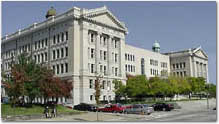
On Thursday night, people filled the auditorium at Baltimore Polytechnic Institute to participate in the Kirwan Commission forum. The auditorium was full of energy, people waving yellow papers that stated #fixtheforumla, and a group of people in matching shirts with “Yes!” and “No!” signs. The 25 members of the Kirwan Commission sat ready to hear from the people of Baltimore City.

How did we get here?

In 2002, The Bridge to Excellence in Public Schools Act created a school aid formula in Maryland. This gave each school system a, “per pupil amount—which was $6,860 in fiscal year 2015—is [was] then adjusted for every local jurisdiction depending on its property value and income levels…counties with less wealth (and therefore less ability to cover educational costs) receive a greater share of state aid” (“Thornton Plan,” 2016). Additionally, “school systems receive supplemental aid” for children based on backgrounds of poverty, limited English proficiency, and special education services (“Thornton Plan,” 2016).

Now, in the fall of 2017, the Kirwan Commission (named after the chair of the commission, Dr. Kirwan) is tasked with revisiting this formula and providing the General Assembly of Maryland with recommendations. The members of the commission conducted forums across the state to hear from concerned citizens. For more information on the Kirwan Commission, see the links to the articles in the reference section of this post.

I left the forum thinking about a few things:

The people who spoke at the forum shared a wide-range of perspectives and offered different ideas on the biggest problems in our public education system in Baltimore. Each speaker spoke from his or her sphere of influence about specific concerns. People shared concerns about class sizes, access to SAT prep and AP courses, teacher preparation and retention, the burden of taxes to the citizens of Baltimore, and the need for more counselors and social workers. I was struck with the complexity of the problems shared at the forum and immense task upon the shoulders of the Kirwan Commission.


Then I heard the Kirwan Commission would give its recommendations by the end of 2017. I had just watched as leaders from Baltimore City pleaded with the commission to hear their concerns and possible solutions. The members of the commission sat quietly without responding. The forum was held on October the 12th, and the commission is going to provide their recommendations by the end of 2017? I believe a timeline to hear the concerns, take them into consideration, conduct a healthy debate, and make a recommendation would take a lot longer than the two and a half months left in 2017. Was this forum all a formality? How will this commission be able to make meaningful recommendations based on the experience and insights of the people these changes will most affect?  It is the difference between hearing and listening. I could see that the commission was hearing the people of Baltimore, but was the commission really listening? We will see in January 2018.

References

Richman, T. & Bowie, L (2017, October 12). Hundreds urge Kirwan Commission to provide equitable funding to schools. Retrieved October 14, 2017 from

Sterner, Rachel Baye Nathan. “A packed Poly urges equity in school funding.” WYPR, WYPR, 13 Oct. 2017, wypr.org/post/packed-poly-urges-equity-school-funding.

Thornton Plan. (2016, January 29). Retrieved October 14, 2017, from